Writing & Grammar
Meese or Mooses: Which Is Correct?
If you have ever stood in a Canadian forest clearing, watched three enormous animals wade out of a lake, and wondered…
Read MoreThe Writing & Grammar section of Clarifyra helps readers improve grammar, vocabulary, sentence structure, and word choice. Here, you can explore clearer alternatives to common phrases, useful transition words, academic expressions, and practical grammar guidance for essays, articles, reports, and everyday writing.
Our guides focus on more than just correctness. They explain differences in tone, formality, meaning, and context so you can choose wording that sounds natural and fits the situation. Whether you want to avoid repetition, strengthen a sentence, or understand a grammar point more clearly, this section is designed to make better writing easier.

If you have ever stood in a Canadian forest clearing, watched three enormous animals wade out of a lake, and wondered…
Read More →
“Yesterday I rode my bike to work.” “I have ridden this trail a dozen times.” Most English speakers produce sentences like…
Read More →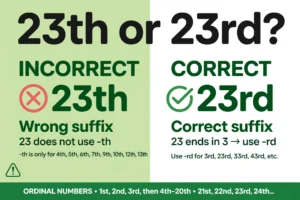
You have probably seen it in the wild: a party invitation reading “Saturday 23th June”, a certificate announcing a “23th anniversary”,…
Read More →
“The repairs costed me £400.” It sounds logical — most English verbs add -ed for the past, so why not cost?…
Read More →
Few spelling pairs cause as much quiet hesitation as spiraled and spiralled. You type “energy bills spiralled last winter” in London,…
Read More →
If you are typing a bedtime story, a baby-shower card, or a product listing for a child’s comfort blanket, you have…
Read More →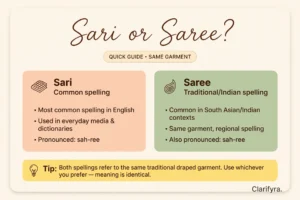
Sari and saree are two spellings of the same word for the same garment — the long length of cloth draped…
Read More →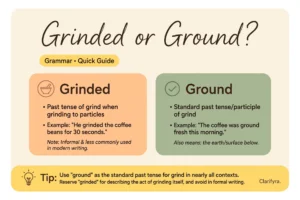
“Grinded” looks logical — most English verbs just add -ed — but ground is the standard past tense and past participle…
Read More →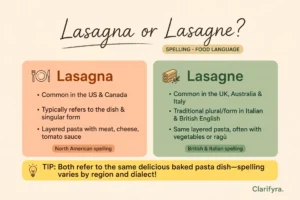
Both lasagna and lasagne are correct — you are choosing between regional habits, not between right and wrong. In the United…
Read More →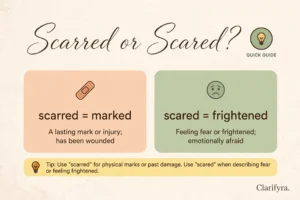
Writing “she was scarred by the experience” when you mean she was frightened by it changes the sentence more than a…
Read More →