Sensei or Sensai: Which Is Correct?
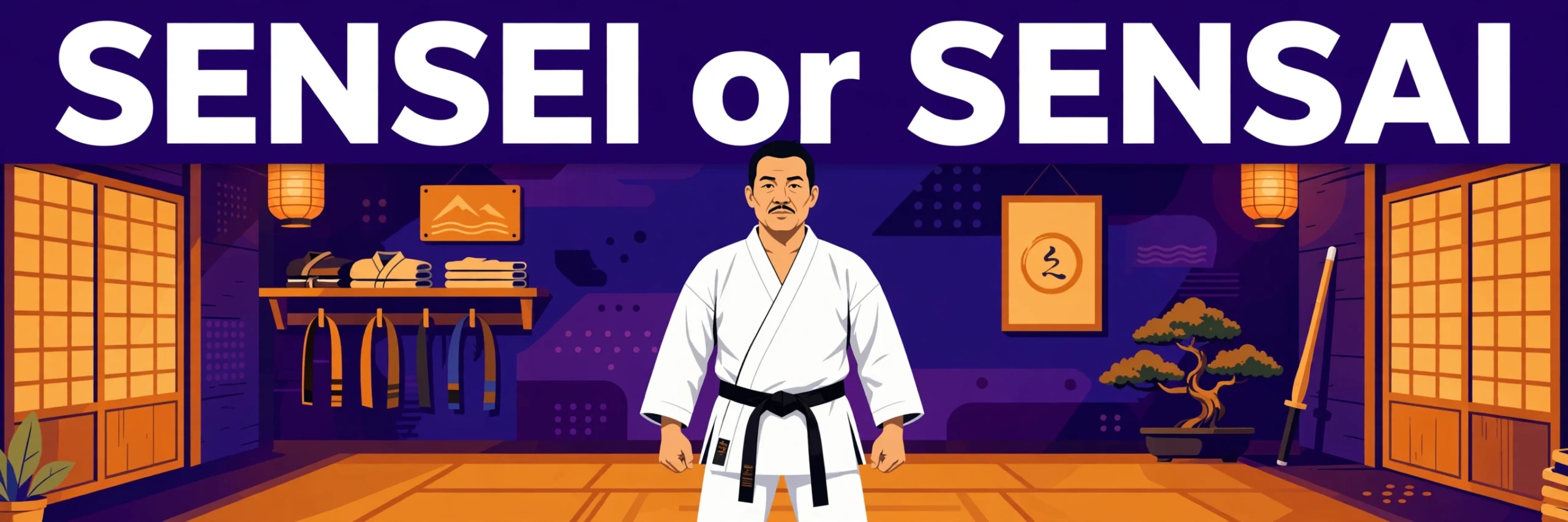
The correct spelling is sensei. Sensai is a misspelling — a phonetic guess at a Japanese word, written the way it sounds to an English ear rather than the way it is actually spelled. It has no entry in Merriam-Webster or Cambridge Dictionary, and it appears in no dictionary of Japanese. The word itself is Japanese 先生, romanised as sensei, and it means “teacher” — or more literally, “one who was born before,” someone whose experience puts them ahead of you. It is a title of respect used for teachers, martial arts instructors, doctors, lawyers, authors, and artists. Getting the spelling right matters more than it does for most loanwords, because the misspelling changes the word’s structure: sensei is built from two meaningful parts, sen and sei, and sensai breaks the second of them.
Quick Answer: Use sensei — never sensai. Sensei (先生) is the Japanese title for a teacher or master, pronounced “SEN-say.” Sensai has no dictionary entry and is a phonetic misspelling. Use it after a surname — Tanaka-sensei — never before a name and never for yourself.
What the Dictionaries Say
Merriam-Webster defines sensei as “a teacher or instructor usually of Japanese martial arts (such as karate or judo),” gives the plural as “sensei or senseis,” and records the first known use in English in 1874. The etymology is a single line: “Japanese, teacher, master.” Cambridge Dictionary’s entry carries the word in example sentences drawn from real writing: “He originally became interested in weight training through the influence of his karate sensei,” “People who have earned a black belt have gone through all the kyu ranks and have earned the title of sensei.” The examples show the word behaving as an ordinary English noun — countable, usable with the and his — while keeping its Japanese character as a title.
The pronunciation is /ˈsɛnˌseɪ/ — “SEN-say,” with the stress on the first syllable and the second syllable rhyming with say. That pronunciation is the source of the misspelling: an English speaker hearing “SEN-say” and writing it down for the first time will often produce sensai, because -ai looks like a plausible way to spell the “ay” sound. It is the same instinct that produces sensay and sinsay, two other misspellings that circulate online.
Merriam-Webster’s dictionary page for sensai returns no entry at all, and Cambridge has none either. That absence is worth stating carefully: it does not prove that no dictionary anywhere has ever listed the spelling, but the two major dictionaries consulted for this article do not recognise it, and every usage guide that discusses the pair calls it a misspelling.
What Sensei Actually Means
Sensei is written with two kanji: 先 (sen), meaning “before” or “ahead,” and 生 (sei), meaning “life” or “born.” Together they mean, literally, “one who was born before” — a person who has come earlier along the path and can therefore guide those who come after. The same two characters are read xiānshēng in Mandarin Chinese, seonsaeng in Korean, and tiên sinh in Vietnamese, and in each language the word carries the same sense of a respected elder or teacher.
In Japan, the title reaches far beyond the classroom and the dojo. School teachers are sensei, and so are doctors, dentists, lawyers, politicians, authors, artists, and priests. A patient calls their doctor sensei; a client calls their lawyer sensei; a reader calls a favourite novelist sensei. The common thread is mastery and authority: the word marks someone whose knowledge or skill earns respect, whatever the field. In English, the martial arts sense came first, but the wider sense is now familiar through novels, films, and anime, where a character’s sensei may be a calligraphy teacher, a music teacher, or a doctor rather than a martial artist.
The word is used for people of both genders. A woman teacher is sensei just as a man teacher is, and there is no feminine form. This is worth saying explicitly, because English speakers sometimes assume that a title borrowed from a martial art must be masculine, and the assumption is wrong in Japanese and in English usage alike.
How to Use Sensei Correctly
The most important usage rule is about word order. In Japanese, the title follows the name: Tanaka-sensei, Yamada-sensei, Hara-sensei. Putting it first — “Sensei Tanaka” — is the single most common mistake English speakers make with the word, and it reverses the Japanese order. Used on its own, as a form of address, it stands alone: a student calls out “Sensei!” to get a teacher’s attention, just as an English speaker might call out “Teacher!” The word can also be used without any name at all, as a common noun: “our sensei,” “the sensei,” “a sensei at the dojo.”
The second rule is that you never use sensei for yourself. It is a title other people give you, not one you claim. Introducing yourself as “Sensei Smith” sounds presumptuous to a Japanese reader, in the same way that calling yourself “the master” would. In English writing, the safe rule is simple: other people are sensei; you are not.
The plural deserves a sentence of its own, because it surprises people. Merriam-Webster gives two plurals: sensei and senseis. The first follows the Japanese pattern, in which the word does not change in the plural — “the two sensei of the dojo.” The second follows the ordinary English pattern of adding -s. Both are accepted. In formal writing about Japan, the unchanged plural sensei is more common; in casual English, senseis is the one most readers will expect.
| Usage | Correct | Incorrect |
|---|---|---|
| Spelling | sensei | sensai, sensay, sinsay |
| With a name | Tanaka-sensei | Sensei Tanaka |
| Addressing a teacher | Sensei! (alone) | My sensei! as a title for yourself |
| Plural | sensei or senseis | sensei’s as a plural |
| Who it describes | Teachers, doctors, lawyers, artists, masters of a skill | Only martial artists; only men |
Sensei, Senpai, and the Other Titles Around Them
Sensei is one title in a small system, and the neighbouring titles explain it by contrast. The most commonly confused is senpai (先輩), which means a senior member of the same group — someone ahead of you in school, in a club, or at work, but not your teacher. A senpai is a more experienced peer; a sensei is a teacher or master. The opposite of senpai is kohai, a junior member of the group.
Above sensei, in martial arts and Zen, sit further titles. A shihan is a master instructor, a sensei with broader authority over a school. A roshi is a venerable Zen master, a rank above sensei in some Zen schools. A daisensei — “great teacher” — is the top teacher of a school. These titles depend on the school and are not interchangeable. In ordinary English writing, sensei is the title you will need, and the others are worth knowing only so that you recognise them when they appear.
Correct vs Incorrect
| Incorrect | Correct | Why |
|---|---|---|
| My sensai taught me karate. | My sensei taught me karate. | Sensai is a misspelling; the dictionaries list only sensei. |
| Sensei Tanaka is our instructor. | Tanaka-sensei is our instructor. | In Japanese, the title follows the surname. |
| Hello, I’m Sensei Smith. | Hello, I’m Mr Smith. I teach karate. | You never use sensei for yourself. |
| The sensai’s of the dojo met today. | The sensei of the dojo met today. | Two errors: the spelling, and an apostrophe used as a plural. |
| Only men can be called sensei. | Women and men alike are called sensei. | The title is used for people of both genders. |
| Ask your sensay for help. | Ask your sensei for help. | Sensay is another phonetic misspelling of the same word. |
Common Mistakes to Avoid
1. Writing “sensai” because it sounds right
It does sound right — “SEN-say” is the pronunciation, and -ai is a plausible English spelling of that sound. But loanwords keep the spelling of their source language’s romanisation, not the spelling a first-time hearer would invent. Sensei is the romanisation of 先生, and it is the only spelling the dictionaries record. Remember the second half of the word: -sei, from 生, “born.”
2. Putting “sensei” before the name
“Sensei Tanaka” follows English word order — title first, like “Professor Tanaka” — but it reverses the Japanese order, and Japanese readers will notice immediately. The title goes after the surname: Tanaka-sensei, Hara-sensei, Yamada-sensei. Used without a name, it stands alone: “Ask sensei,” “Sensei says we start at six.”
3. Using “sensei” for yourself
A title of respect is given, not claimed. Calling yourself sensei — on a business card, in an introduction, in a social media bio — reads as self-important to anyone who knows the word. Let your students, clients, or readers call you sensei; introduce yourself by your name and let the title come from them.
4. Assuming “sensei” means only a martial arts teacher
Martial arts are where most English speakers first meet the word, and Merriam-Webster’s definition still leads with karate and judo. But in Japanese the title covers school teachers, doctors, lawyers, politicians, authors, and artists — anyone whose mastery earns respect. Restricting it to the dojo misses most of what the word means.
Frequently Asked Questions
Is “sensai” a word?
No. It has no entry in Merriam-Webster or Cambridge Dictionary, and it is a phonetic misspelling of sensei. The correct spelling is sensei, from the Japanese 先生, and it is the only spelling used in edited English.
How do you pronounce “sensei”?
“SEN-say” — /ˈsɛnˌseɪ/, with the stress on the first syllable and the second syllable rhyming with say. The pronunciation is the same in British and American English.
What does “sensei” literally mean?
“One who was born before.” The kanji are 先 (sen, “before”) and 生 (sei, “born” or “life”). The literal meaning captures the idea behind the title: a teacher is someone who has travelled further along the path and can guide those behind.
Can a woman be a “sensei”?
Yes. The title is used for people of both genders in Japanese, and there is no feminine form. A woman teacher, doctor, or martial arts instructor is sensei in exactly the same way a man is.
What is the difference between “sensei” and “senpai”?
A sensei is a teacher or master — someone who instructs you or holds recognised expertise. A senpai is a senior member of your own group, such as an older student or a longer-serving colleague: someone ahead of you, but not your teacher. The opposite of senpai is kohai, a junior member.
The Takeaway
Sensei is the correct spelling, and sensai is a misspelling with no dictionary entry — a phonetic guess that breaks the word’s second half, sei, “born.” The word is Japanese 先生, literally “one who was born before,” and it is a title of respect for a teacher or master, pronounced “SEN-say.” Use it after a surname — Tanaka-sensei — never before a name, never for yourself, and remember that it belongs to doctors, lawyers, authors, and artists as much as to karate instructors, and to women as much as to men.
Sources: Merriam-Webster (sensei); Cambridge Dictionary (sensei); Oxford Learner’s Dictionaries (sensei); Collins Dictionary (sensei).