Mum or Mom: Which Is Correct in English?
Both mum and mom are correct words for “mother,” but they are used in different varieties of English. Mum is the standard informal form in British English, while mom is the usual form in American English. Canadian usage leans strongly toward mom, while mam is also heard in some parts of Britain and Ireland. The right choice therefore depends mainly on your audience and the variety of English you are using.
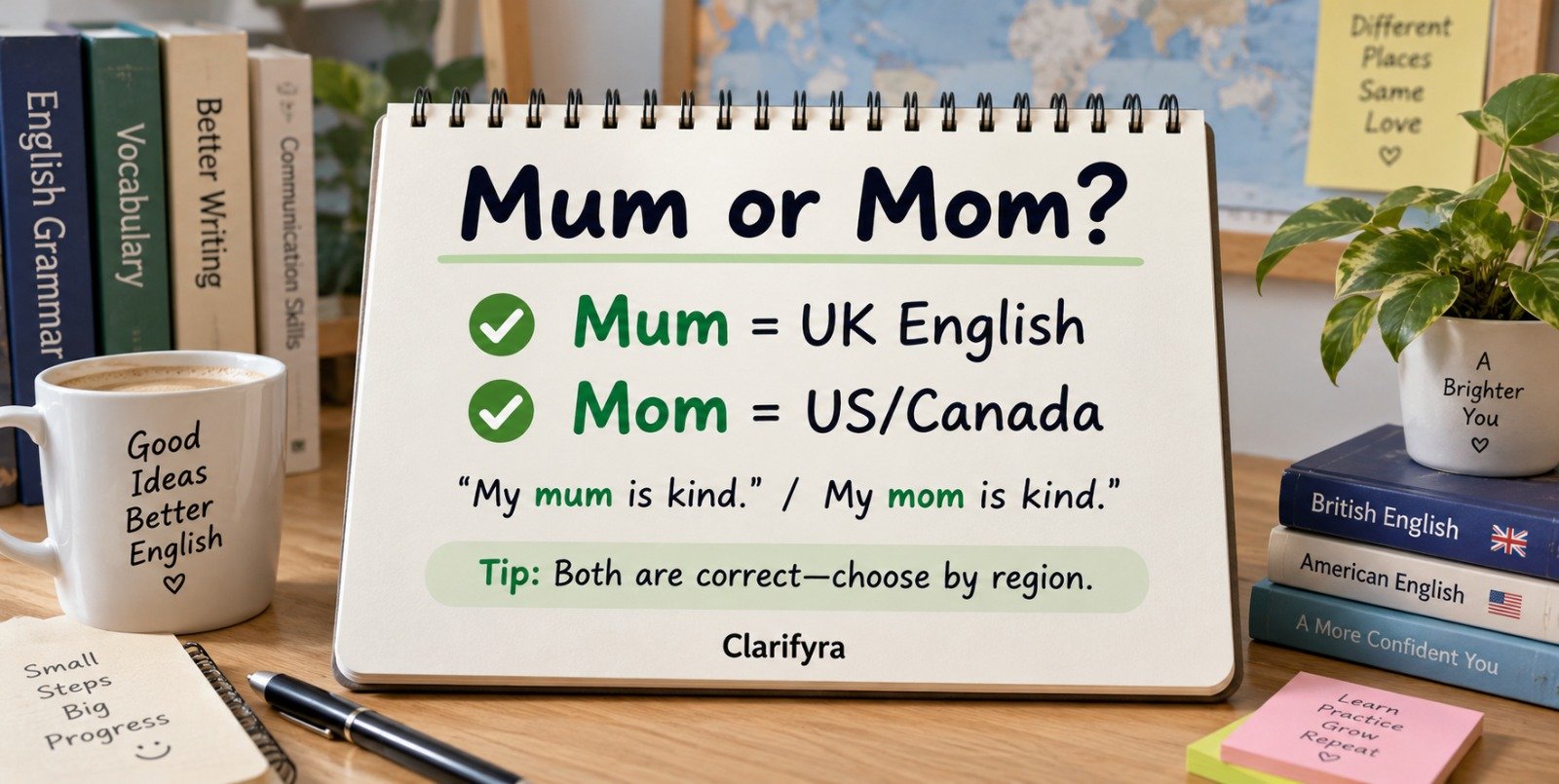
Both mum and mom are correct. Mum is standard in British English, while mom is standard in American English and is also very common in Canada. Use the form that matches your audience and stay consistent.
Mum or Mom: What’s the Difference?
The difference is mainly regional rather than grammatical.
| Feature | Mum | Mom |
|---|---|---|
| Correct? | Yes | Yes |
| Meaning | Mother | Mother |
| Common in | UK, Australia, New Zealand | USA, Canada |
| Style | Informal | Informal |
| Formal alternative | Mother | Mother |
| Example | My mum is calling. | My mom is calling. |
Neither word is more correct in an absolute sense. They are simply preferred in different forms of English.
Many English learners mix up similar-looking words such as Calendar vs Calender: Which Spelling Is Correct?
What Does “Mum” Mean?
Mum is an informal noun meaning mother. It is the standard everyday form in British English and is also widely used in countries influenced by British spelling and usage.
Examples:
- My mum is a teacher.
- I called my mum after work.
- Mum, can you help me with this?
- Her mum lives in Manchester.
When Mum is used like a personal name, it is usually capitalized:
Correct: I asked Mum for advice.
When it follows a possessive word such as my, your, or her, it is normally lowercase:
Correct: My mum is at home.
What Does “Mom” Mean?
Mom also means mother, but it is most strongly associated with American English.
Examples:
- My mom made dinner.
- I bought my mom a birthday gift.
- Mom, are you coming with us?
- His mom works at a hospital.
The grammatical role is the same as mum. Only the regional preference is different.
In standard American writing, mom is the natural choice.
Which Is Correct: Mum or Mom?
Both are correct.
Use:
- mum for British English
- mom for American English
- mom in most Canadian English contexts
- mum in Australian and New Zealand English
The important thing is consistency. If an article is written in British English, changing randomly between mum and mom can make the writing feel inconsistent.
For example:
British English:
My mum is picking me up later.
American English:
My mom is picking me up later.
Both sentences mean exactly the same thing.
Is It Mum or Mom in the UK?
In standard British English, mum is the usual form.
Examples:
- I’m going shopping with my mum.
- My mum called this morning.
- Thanks, Mum.
So if you are writing for a general UK audience, mum is the safest and most natural choice.
However, Britain has many regional dialects, and not everyone uses the same word. In some areas, speakers may say mom or mam instead.
That does not make those forms incorrect. They are simply regional variations.
Do British People Say Mum or Mom?
Most British people use mum, especially in standard British English.
However, regional speech varies. Mom can be heard in parts of the West Midlands, while mam is particularly common in some northern areas.
This means the statement “British people always say mum” is too broad.
For general British writing, though, mum remains the preferred form.
Mum or Mom in Canada
Canadian English is influenced by both British and American English, but mom is generally the more common everyday spelling.
For example:
- My mom is visiting this weekend.
- I asked my mom for help.
You may still see mum used by some Canadians, especially depending on family background, personal preference, or regional influence.
If you are writing specifically for a Canadian audience, mom is usually the safer choice.
Mum, Mom, or Mam?
All three words can mean mother, but they are associated with different regions.
Mum
Common in:
- England
- Scotland
- Australia
- New Zealand
Example:
My mum is waiting outside.
Mom
Common in:
- United States
- Canada
Example:
My mom is waiting outside.
Mam
Used regionally in places such as:
- Northern England
- parts of Ireland
- other local dialect areas
Example:
I’m going to see my mam.
The meaning remains the same. The main difference is regional usage.
Which Came First: Mum or Mom?
In recorded English usage, mum appears earlier than mom as an informal word for mother.
Both forms developed from older family words such as mama, mamma, and similar child-language forms for a mother.
The words belong to a much older pattern found across many languages, where sounds such as ma and mama are commonly associated with mothers.
So although mum was recorded earlier in this particular modern English sense, neither form should be treated as more legitimate today.
Why Are Mum and Mom Different?
The difference developed largely because English pronunciation and spelling evolved differently across regions.
British English settled on mum as the standard informal form, while American English favored mom.
The words also reflect differences in pronunciation. British speakers generally pronounce mum with a short vowel sound, while American mom typically has a broader vowel sound.
The spelling therefore reflects how the word is naturally pronounced in each variety of English.
Examples in British and American English
Here are some side-by-side examples.
| British English | American English |
|---|---|
| My mum is cooking dinner. | My mom is cooking dinner. |
| I called my mum yesterday. | I called my mom yesterday. |
| Mum, where are my keys? | Mom, where are my keys? |
| Her mum works nearby. | Her mom works nearby. |
| I bought Mum some flowers. | I bought Mom some flowers. |
The grammar stays exactly the same.
Only the regional word changes.
Should Mum and Mom Be Capitalized?
Capitalize Mum or Mom when the word replaces a person’s name.
Correct:
I asked Mom about it.
Correct:
Mum will be home soon.
Use lowercase when the word is used as a common noun.
Correct:
My mom is at work.
Correct:
His mum called earlier.
A useful rule is to check whether you could replace the word with a person’s name.
Compare:
I asked Mum.
I asked Sarah.
Here, Mum acts like a name, so it is capitalized.
But:
I asked my mum.
Here, it is a general family noun, so lowercase is appropriate.
Common Mistakes
Treating “Mum” as a Misspelling
Mum is not a misspelling of mom. It is the standard British English form.
Treating “Mom” as Incorrect in Britain Everywhere
Although mum is standard British English, mom can appear in some regional dialects.
Mixing the Two Forms Randomly
If you are writing a single article, story, or document, choose one form based on your target variety of English and use it consistently.
Forgetting Capitalization
Use Mom or Mum when it acts like a name, but lowercase it after words such as my, your, and her.
Easy Way to Remember the Difference
A simple rule is:
UK → Mum
US → Mom
You can also remember that American English commonly uses mom, while British English usually uses mum.
For Canadian English, mom is generally the better choice.
Final Verdict: Mum or Mom?
Both forms are correct and mean the same thing. Choose mum for standard British English and mom for standard American English. Canadian English usually favors mom, while mam is a valid regional alternative in some areas. The best choice depends on your audience and the English variety you are following.
You May Also Read | Moral vs Morale Meaning: What’s the Difference?
FAQs
Is mum or mom correct?
Both are correct. Mum is standard in British English, while mom is standard in American English. The difference is regional rather than grammatical.
Is it mum or mom in British English?
Mum is the standard choice in British English. Some regional dialects may use mom or mam, but mum is the safest form for general UK writing.
Do British people say mum or mom?
Most British speakers say and write mum, although pronunciation and vocabulary vary by region. Some speakers use mom or mam.
Is it mum or mom in Canada?
Mom is generally more common in Canadian English, although mum is also used by some speakers.
What is the difference between mum, mom, and mam?
They all mean mother. Mum is mainly British, mom is mainly American and Canadian, and mam is a regional form found in parts of Britain and Ireland.
Can I use mum and mom in formal writing?
They are both informal family terms. In highly formal writing, mother is usually more appropriate. In normal personal writing, mum and mom are perfectly acceptable.
For most readers, the simplest rule is to match the spelling to the variety of English being used and remain consistent throughout the text. That approach keeps your writing clear, natural, and in line with Clarifyra’s goal of helping readers find better ways to say what they mean.