25 Other Ways to Say “Hope You Had a Great Weekend” Naturally
“Hope you had a great weekend” is a warm, familiar way to reconnect with someone after Saturday and Sunday. It works especially well in Monday emails, workplace chats, and conversations with friends, but repeating the same greeting every week can start to feel automatic. Choosing a slightly different phrase can make your message sound more personal, professional, friendly, or playful depending on who you’re speaking to.
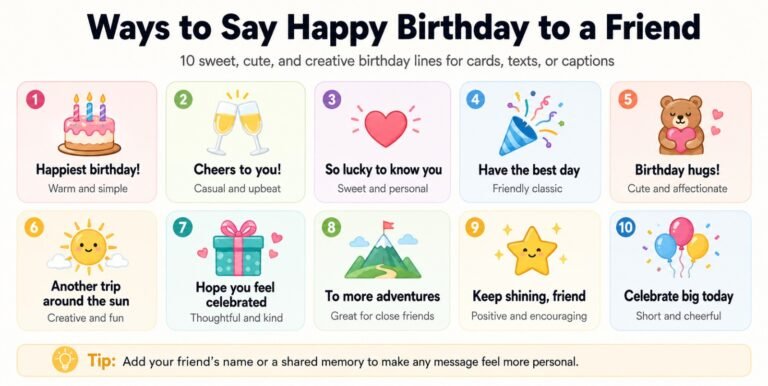
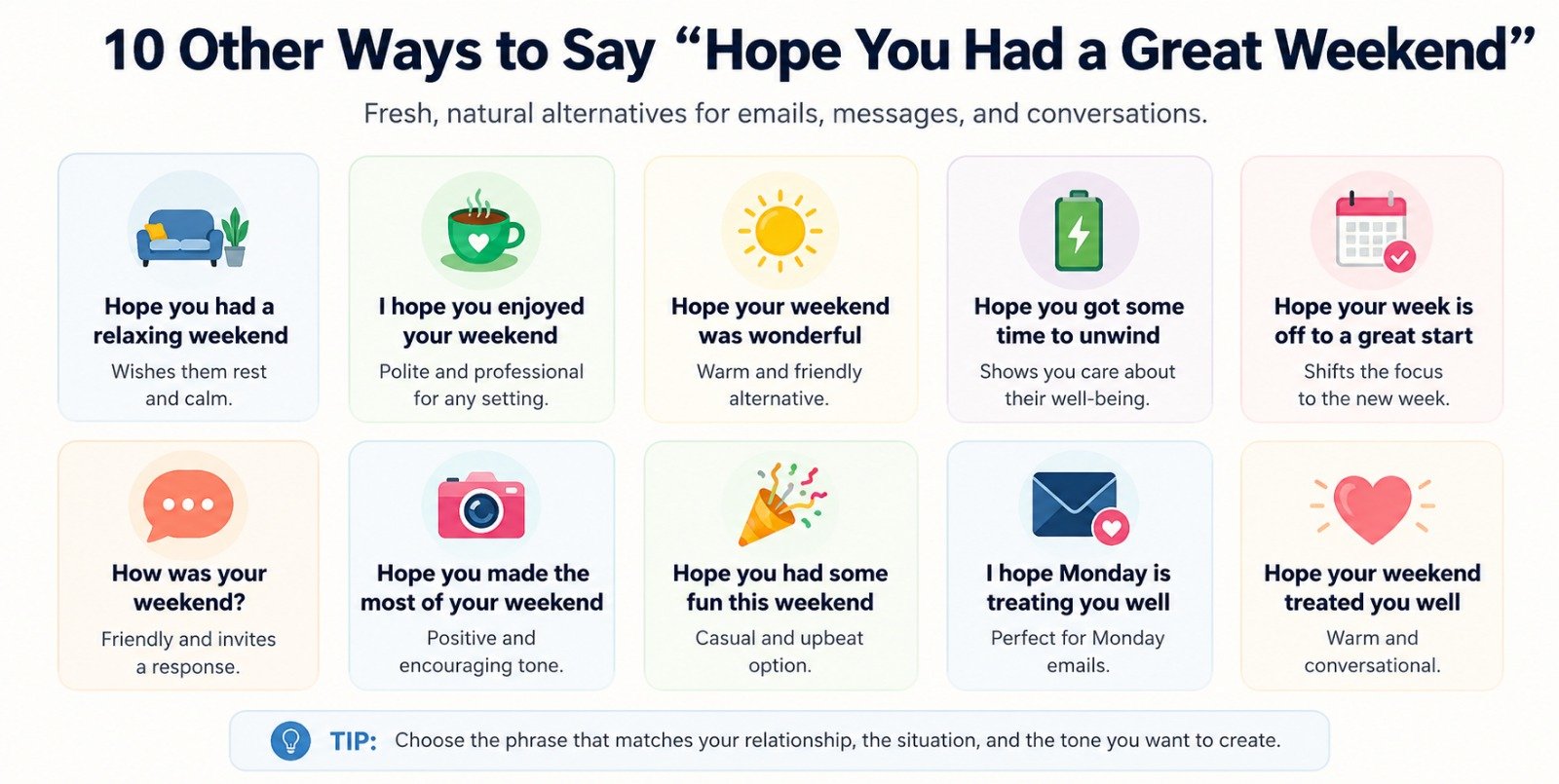
Natural alternatives to “Hope you had a great weekend” include “Hope you had a relaxing weekend,” “I hope you enjoyed your weekend,” “Hope you got some time to unwind,” “I hope your weekend was wonderful,” and “Hope your week is off to a great start.” The best choice depends on your relationship with the reader and how formal you want to sound.
What Does “Hope You Had a Great Weekend” Mean?
“Hope you had a great weekend” is a friendly expression of goodwill. You’re essentially telling someone that you hope their recent time away from work, school, or everyday responsibilities was pleasant.
The phrase does not necessarily invite a detailed description of the weekend. In an email, it often functions as a courteous opening before moving to the main subject. In conversation, however, it can naturally lead to questions about what the other person did.
The complete grammatical form is “I hope you had a great weekend.” Dropping “I” and writing “Hope you had a great weekend” is common in informal and semi-professional communication.
Quick Comparison of Weekend Greetings
| Expression | Tone | Best Used For |
|---|---|---|
| Hope you had a relaxing weekend | Warm, neutral | Coworkers, friends, clients |
| I hope you enjoyed your weekend | Polite | Professional emails |
| Hope you had a wonderful weekend | Friendly | Coworkers, family, friends |
| I trust you had a pleasant weekend | Formal | Business correspondence |
| Hope you got some time to unwind | Caring, casual | Colleagues and friends |
| How was your weekend? | Conversational | Friends and familiar coworkers |
| Hope you’re feeling refreshed | Positive | Monday workplace messages |
| Hope your week is off to a great start | Professional | Monday and Tuesday emails |
| Hope you had some fun this weekend | Casual | Friends and close coworkers |
| Hope your weekend treated you well | Warm, conversational | Friendly emails and texts |
These expressions are not completely interchangeable. For example, “I trust you had a pleasant weekend” is more formal than “Hope you had some fun this weekend,” while “How was your weekend?” asks for a response instead of simply offering a good wish.
Professional Other Ways to Say “Hope You Had a Great Weekend”
Professional alternatives should sound friendly without becoming overly personal. They work particularly well when writing to coworkers, managers, clients, or business contacts.
I Hope You Had a Relaxing Weekend
This is one of the safest alternatives because it sounds considerate without assuming that the person spent the weekend doing something exciting.
Example:
“I hope you had a relaxing weekend. I wanted to follow up on the proposal we discussed Friday.”
I Hope You Enjoyed Your Weekend
A polished and versatile option, this phrase works with colleagues, clients, managers, and people you do not know especially well.
Example:
“I hope you enjoyed your weekend. Please find the revised schedule attached.”
I Trust You Had a Pleasant Weekend
This version is noticeably more formal. “I trust” can work well in traditional business correspondence, although it may sound overly polished in a casual workplace.
Example:
“I trust you had a pleasant weekend. I’m writing regarding Thursday’s meeting.”
Hope You’re Feeling Refreshed After the Weekend
This creates a positive transition into the working week. It is especially suitable for friendly teams.
Example:
“Hope you’re feeling refreshed after the weekend. We have a few updates to cover this morning.”
I Hope You Had a Restful Weekend
“Restful” emphasizes relaxation rather than entertainment, making it a thoughtful choice after a particularly busy workweek.
Example:
“I hope you had a restful weekend after such a busy week.”
Friendly Other Ways to Say “Hope You Had a Great Weekend”
When you know someone well, you can make the greeting warmer and more conversational.
Hope You Had a Wonderful Weekend
“Wonderful” adds more warmth than “great” while keeping the meaning familiar and natural.
Example:
“Hope you had a wonderful weekend! How’s your Monday going?”
Hope Your Weekend Treated You Well
This has a relaxed, conversational feel. It works nicely in friendly emails, messages, and workplace chats.
Example:
“Hope your weekend treated you well. Mine went by far too quickly!”
Hope You Got Some Time to Relax
Instead of assuming the entire weekend was enjoyable, this phrase focuses on getting a little rest.
Example:
“Hope you got some time to relax before the new week started.”
Hope You Made the Most of Your Weekend
This alternative is upbeat but broad enough to cover relaxing, traveling, spending time with family, or simply enjoying time away from work.
Example:
“Hope you made the most of your weekend. Ready for another week?”
Hope You Had a Lovely Weekend
“Lovely” sounds warm and friendly. It is especially natural in British English, although it is easily understood elsewhere.
Example:
“Hope you had a lovely weekend with your family.”
Casual Other Ways to Say “Hope You Had a Great Weekend”
With friends, close colleagues, and people you regularly chat with, you can be more direct and relaxed.
How Was Your Weekend?
Unlike a simple good wish, this is an actual question and invites the other person to share something.
Example:
“How was your weekend? Did you end up going hiking?”
Did You Have a Good Weekend?
This is another conversational question that works naturally in face-to-face communication and casual messages.
Example:
“Did you have a good weekend? It looked like the weather was perfect.”
Hope You Had Some Fun This Weekend
This sounds cheerful and informal. It is better suited to friends and familiar coworkers than clients or formal business contacts.
Example:
“Hope you had some fun this weekend. Mine was mostly movies and sleep.”
Hope Your Weekend Was Awesome
“Awesome” makes the greeting noticeably more enthusiastic and casual.
Example:
“Hope your weekend was awesome! Tell me how the concert went.”
Hope You Got to Enjoy Some Downtime
“Downtime” means time spent away from work or responsibilities, so this variation is especially useful after a demanding week.
Example:
“Hope you got to enjoy some downtime before Monday arrived.”
Other Ways to Say “Hope You Had a Great Weekend” in a Monday Email
A weekend greeting feels particularly natural at the beginning of a Monday email because the weekend has just ended. However, the opening should match your relationship with the recipient.
Hope Your Week Is Off to a Great Start
This is an excellent alternative when you want to acknowledge Monday without asking about someone’s personal weekend.
Example:
“Hope your week is off to a great start. I wanted to check whether you had a chance to review the latest draft.”
I Hope You Had a Good Weekend and a Smooth Start to the Week
This combines a weekend wish with a Monday greeting and works especially well in warm professional correspondence.
Example:
“I hope you had a good weekend and a smooth start to the week. I’m following up on our conversation from Friday.”
Hope You’re Ready for a Good Week Ahead
This expression shifts attention toward the upcoming week instead of the weekend itself.
Example:
“Hope you’re ready for a good week ahead. Here are the priorities for Monday.”
I Hope Monday Is Treating You Well
This is friendlier and more conversational, so it fits coworkers and familiar business contacts better than highly formal correspondence.
Example:
“I hope Monday is treating you well. Just checking in about tomorrow’s presentation.”
Hope You’re Starting the Week Feeling Refreshed
This is positive without sounding excessively enthusiastic.
Example:
“Hope you’re starting the week feeling refreshed. I’ve included the latest project notes below.”
A weekend greeting is usually most natural on Monday. By Wednesday or Thursday, referring to the previous weekend may sound delayed. At that point, “Hope your week is going well” is generally a better fit.
Warm and Thoughtful Ways to Say It
Sometimes you want to sound more caring than a routine Monday greeting.
I Hope You Had Time to Recharge
“To recharge” suggests recovering energy after a busy period.
Example:
“I hope you had time to recharge. Last week was certainly a busy one.”
Hope the Weekend Gave You a Chance to Unwind
This works well when you know the recipient has recently been busy or under pressure.
Example:
“Hope the weekend gave you a chance to unwind after the conference.”
I Hope You Had Some Well-Deserved Rest
Use this when there is a genuine reason to acknowledge someone’s hard work. Without that context, “well-deserved” can sound unnecessarily dramatic.
Example:
“I hope you had some well-deserved rest after finishing the launch.”
Hope You Had Some Quality Time to Yourself
This feels personal and thoughtful, so it is better suited to people you already know reasonably well.
Example:
“Hope you had some quality time to yourself this weekend.”
Funny Ways to Say “Hope You Had a Great Weekend”
A playful greeting can make a Monday message more memorable, but humor works best with people who already know your personality.
Hope Your Weekend Lasted Longer Than Mine
A relatable Monday joke that works well among coworkers and friends.
Example:
“Hope your weekend lasted longer than mine. Somehow Monday is already here.”
Hope Monday Hasn’t Ruined Your Weekend Mood Yet
This is lighthearted and works particularly well in team chats.
Example:
“Hope Monday hasn’t ruined your weekend mood yet. Ready for the morning meeting?”
Hope Your Coffee Is Strong After the Weekend
This mixes the familiar Monday-coffee joke with a weekend greeting.
Example:
“Hope your coffee is strong after the weekend. We have a busy morning ahead.”
Hope You Survived the Weekend
This is clearly playful rather than literal. Avoid it in formal messages or situations where the recipient may actually have had a difficult weekend.
Example:
“Hope you survived the weekend! What did you get up to?”
Welcome Back to Reality
This works among close friends or coworkers but is too casual for most client communication.
Example:
“Welcome back to reality. Hope you had an amazing weekend!”
“Hope You Had a Great Weekend” Quotes and Messages
When you need something warmer for a social post, text, card, or message, a complete weekend wish may work better than a short email opener.
“Hope Your Weekend Brought You Plenty of Reasons to Smile”
This is warm without becoming overly emotional. It suits friends, relatives, and friendly messages.
“Hope Your Weekend Was Full of Rest, Laughter, and Good Moments”
This version gives the wish a little more personality and works well in messages or social captions.
“May the Good Energy From Your Weekend Follow You Into the Week”
This shifts smoothly from weekend relaxation to a positive new week.
“Hope You Made Some Great Memories This Weekend”
Use this when the person had plans, traveled, celebrated something, or spent time with people they care about.
“Here’s to Carrying a Little Weekend Happiness Into Monday”
This has a cheerful quote-like style that works particularly well as a Monday caption or message.
“Hope You Had a Great Weekend” Meme-Style Captions
Meme-style wording is usually intentionally exaggerated, playful, or relatable. It should not be treated as a direct professional replacement for the original expression.
Hope You Had a Great Weekend, Because Monday Has Arrived
A simple Monday joke suitable for a meme caption or casual workplace chat.
Weekend: Gone Too Soon. Monday: Right on Time.
This plays on the familiar feeling that weekends pass quickly.
Hope You Enjoyed the Weekend. Your Inbox Missed You.
This works especially well as workplace humor.
Two Days of Weekend, Five Days of Missing It
A short caption that fits social posts and memes better than ordinary conversation.
Hope Your Weekend Was Great. Now Where’s the Coffee?
This is another light Monday-themed version for social posts, friends, and casual team chats.
Not Every Alternative Means Exactly the Same Thing
Choosing another way to say “Hope you had a great weekend” requires more than swapping one adjective for another. Some expressions subtly change what you are communicating.
“Hope you had a relaxing weekend” assumes or wishes for rest. “Hope you had fun this weekend” focuses on enjoyment. “How was your weekend?” invites an answer. “Hope your week is off to a great start” does not ask about the weekend at all; instead, it redirects attention toward the new week.
The relationship matters too. “I trust you had a pleasant weekend” can sound polished in formal correspondence but stiff in a group chat. Meanwhile, “Hope your weekend was awesome” sounds completely natural between friends but may be too casual for a new client.
How to Choose the Right Weekend Greeting
For a client, manager, or new professional contact, keep the wording simple and neutral. “I hope you enjoyed your weekend” or “Hope your week is off to a great start” will usually work without sounding overly familiar.
For coworkers and people you know well, a warmer phrase can create more genuine conversation. With friends, you can ask “How was your weekend?” or use humorous wording. The goal is not to find the fanciest alternative; it is to choose one that sounds natural coming from you.
Frequently Asked Questions
What are other ways to say “Hope you had a great weekend”?
Natural alternatives include “I hope you enjoyed your weekend,” “Hope you had a relaxing weekend,” “Hope you got some time to unwind,” “Hope your weekend was wonderful,” and “Hope your week is off to a great start.”
Is “Hope you had a great weekend” professional?
Yes. It is appropriate in many professional emails, particularly on Monday. Adding “I” to make it “I hope you had a great weekend” can make the sentence feel slightly more complete and polished.
How do you say “Hope you had a great weekend” professionally?
Try “I hope you had a relaxing weekend,” “I hope you enjoyed your weekend,” or “I trust you had a pleasant weekend.” Choose the last option mainly for more formal business communication.
What should I write instead of “Hope you had a great weekend” in a Monday email?
A natural alternative is “Hope your week is off to a great start.” It is positive, professional, and useful when you do not want to make assumptions about how someone spent their weekend.
Is “Hope you had a great weekend” grammatically correct?
Yes. It is a common shortened form of “I hope you had a great weekend.” The full version is grammatically complete, while the shortened version is widely accepted in casual emails, messages, and conversation.
Can I say “Hope you had a great weekend” on Tuesday?
You can, especially if Tuesday is the first time you have spoken to the person since the weekend. However, “Hope your week is going well” may sound more timely as the week progresses.
What is a casual way to ask about someone’s weekend?
“How was your weekend?”, “Did you have a good weekend?”, and “Do anything fun this weekend?” are natural casual options. Unlike a simple weekend wish, these questions invite the person to respond.
What is a funny alternative to “Hope you had a great weekend”?
With friends or familiar coworkers, you might say “Hope your weekend lasted longer than mine” or “Hope you enjoyed the weekend. Your inbox missed you.” Humor should be avoided when the relationship or situation calls for a more professional tone.
Conclusion
There is nothing wrong with saying “Hope you had a great weekend,” but changing the wording can help your message better fit the person and situation. Keep professional greetings neutral, make friendly messages warmer, and save playful alternatives for people who will appreciate the humor.
The strongest phrase is ultimately the one that sounds natural for your audience rather than the one that sounds most unusual. Clarifyra focuses on these small but useful differences in tone so you can say what you mean in a way that fits the conversation.
You May Also Read | Other Ways to Say Because: 35 Natural Alternatives for Writing and Conversation