Scarey or Scary: Which Spelling Is Correct?
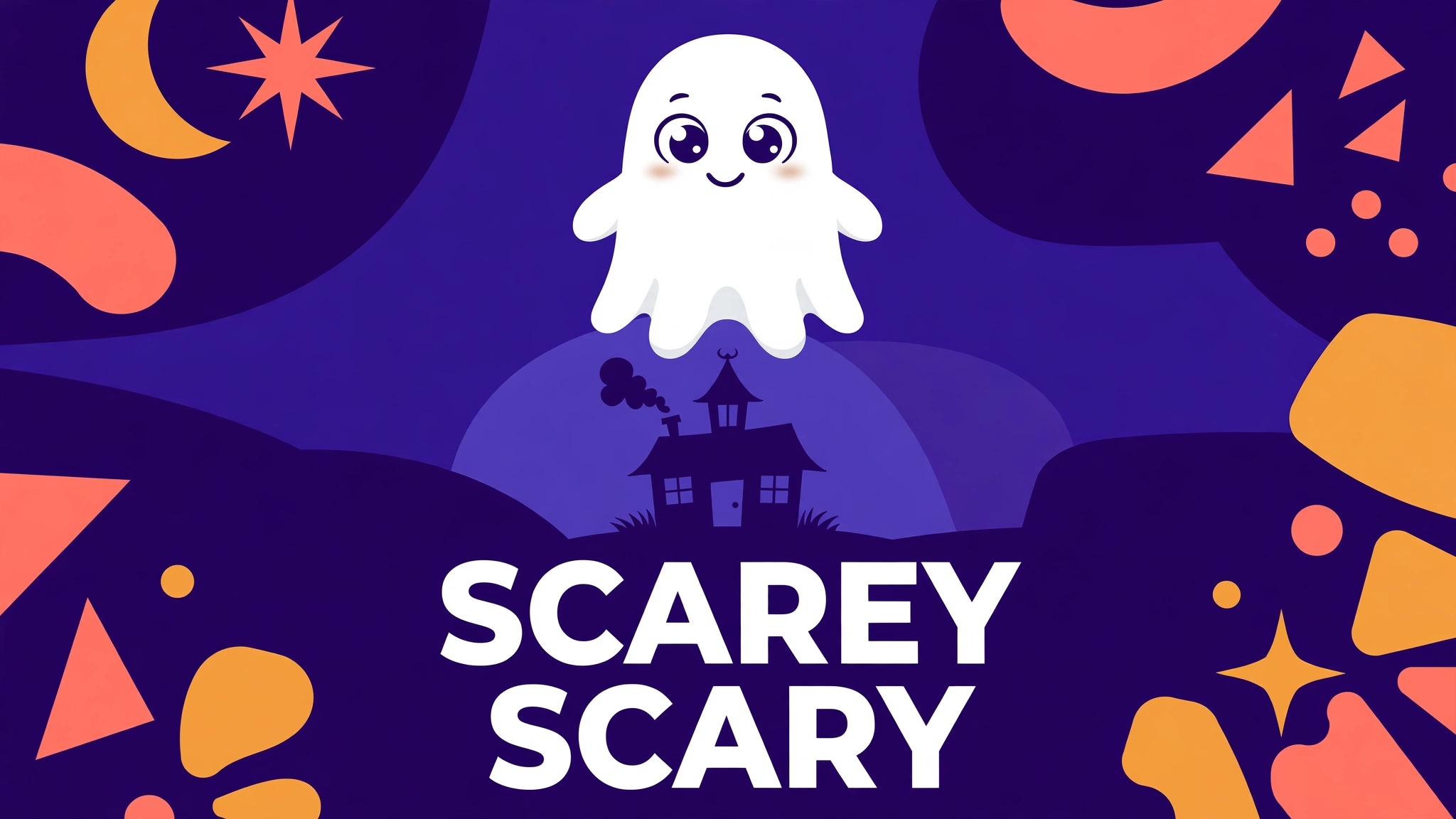
The correct spelling is scary, and it is the correct spelling in British and American English alike. Scarey is not quite a misspelling — Cambridge Dictionary records it as a British variant, listing scary as “informal (UK also scarey),” and other references call it a dated form — but it is rare, old-fashioned, and a hundred times less common than scary. In practice, the advice is simple: always write scary. The only readers who will ever mark scarey wrong are the ones who matter — editors, examiners, and spellcheckers.
Quick Answer: Write scary — it is the standard spelling everywhere. Scarey is a recognised but dated British variant, recorded by Cambridge as “UK also scarey,” and it is now so rare that most readers will take it for a misspelling. The word comes from scare plus -y, with the e dropped: scare → scary, comparative scarier, superlative scariest. Use scary in every register, and keep scarey for quotations of older texts.
What the Dictionaries Say
Cambridge Dictionary defines scary as an informal adjective meaning “frightening,” and marks it B1 — a word learners meet early. Its pronunciation is UK /ˈskeə.ri/ and US /ˈsker.i/, and its examples are the ordinary ones: “She’s a scary woman,” “a scary movie,” “it was a scary moment.” The detail that matters for this article sits in the headword line itself: “informal (UK also scarey).” Cambridge does not call scarey a misspelling. It records it as a variant spelling used in British English.
Merriam-Webster’s entry is fuller, and it adds a second sense that British dictionaries mostly omit. It defines scary first as “causing fright” or “alarming” — “a scary story,” “a scary movie that gave the child nightmares” — and then as “easily scared” and “feeling alarm or fright,” with the example of “a scary horse who spooked and kicked at its own shadow.” The word’s first known use dates to 1582, and its comparative and superlative are scarier and scariest, with the adverb scarily. The Oxford English Dictionary’s earliest citation, from an English translation of Virgil’s Aeneid, spells the word “skearye” — a reminder that scarey is a survivor of an older stage of the spelling rather than a modern invention.
How rare is scarey today? The comparison sites that track word frequency put it bluntly: scary is the spelling to use today, more than a hundred times as common as scarey, which is classed as a dated form and rated rare — used less than once in every ten million words. Wiktionary lists scarey as a dated alternative form of scary. A form can be valid and still be the wrong choice, and scarey is the textbook case: recorded, legitimate, and almost never the right spelling to use.
Why “Scary” Drops the “E”
The spelling follows one of the most reliable rules in English. When a word ends in a silent e and you add a suffix beginning with a vowel, the e drops: scare becomes scared, scaring, and scary; like becomes liking; write becomes writing. The e has no job left once the suffix arrives, because the suffix’s vowel does the work the e was doing — keeping the preceding vowel long — so English drops it. Scarey breaks the rule by keeping an e that the spelling system no longer needs, which is exactly why it looks like a mistake to a modern reader even though it was once an accepted spelling.
| Form | Spelling | Rule | Example |
|---|---|---|---|
| Base adjective | scary | scare + -y, drop the e | A scary film. |
| Comparative | scarier | y → i before -er | Scarier than the first film. |
| Superlative | scariest | y → i before -est | The scariest film of the year. |
| Adverb | scarily | y → i before -ly | Scarily quiet streets. |
| Verb, past | scared | scare + -ed, drop the e | The noise scared me. |
| Verb, -ing | scaring | scare + -ing, drop the e | Stop scaring the children. |
Two Meanings, and a Third That Is Easy to Miss
The first meaning of scary is the one everyone knows: causing fear or alarm. A scary film, a scary story, a scary moment, a scary woman — something that makes you feel frightened. Cambridge gives this sense alone, and it accounts for nearly all uses of the word. It is also the sense that makes scary an informal word: in formal writing, frightening, alarming, or terrifying usually take its place.
The second meaning runs in the opposite direction, and it is the one that trips up British readers. In American English, scary can also mean easily frightened — a scary horse is a horse that spooks easily, not a horse that frightens people. Merriam-Webster lists this sense without reservation, and Collins, the British dictionary, lists it too, defining scary as both “causing fear or alarm” and “easily roused to fear; timid.” Other British dictionaries list only the first sense. The practical advice is to use the second sense only where the audience will understand it — in American writing, or in writing about horses — and to prefer nervous, jumpy, or timid elsewhere.
“Scary” or “Scared”? The Other Confusion
The mix-up with scarey is a spelling question. The mix-up with scared is a meaning question, and it is more common. Scary describes the thing that causes fear; scared describes the person who feels it. A scary film makes you scared. A scared child is frightened by something scary. The two words share a root and a family, but they point in opposite directions — one outward, from the cause to the effect, and the other inward, from the feeling to the person feeling it.
Learners confuse them because many languages use a single word for both directions, and because the two English words sound alike in rapid speech. The test is the same one that works for other pairs of this kind: ask who is doing the feeling. If the sentence is about the person who feels afraid, the word is scared — “I was scared,” “she looked scared.” If it is about the thing that causes the fear, the word is scary — “it was scary,” “a scary noise.”
Correct vs Incorrect
| Incorrect | Correct | Why |
|---|---|---|
| It was a very scarey movie. | It was a very scary movie. | Scary is the standard spelling; scarey is a dated variant. |
| This is the scareist film I have seen. | This is the scariest film I have seen. | y changes to i before -est. |
| The second film was scareyer than the first. | The second film was scarier than the first. | y changes to i before -er; there is no “scareyer.” |
| I was scary when I heard the noise. | I was scared when I heard the noise. | Scared describes the person who feels fear; scary describes the cause. |
| The dog is scarey of thunder. | The dog is scared of thunder. | Same distinction: the dog feels the fear, so the word is scared. |
| A scarey horse spooked at its own shadow. | A scary horse spooked at its own shadow. | Correct as written in American English, where scary can mean “easily frightened.” |
Common Mistakes to Avoid
1. Writing “scarey” in formal or published writing
Cambridge records scarey as a British variant, so it is not a misspelling in the strict sense — but strict senses do not govern what readers think. A reader who meets scarey in an essay, a report, or a published article will almost always take it for an error, because the standard spelling is scary and the variant is a hundred times less common. Spellcheckers flag it, editors correct it, and examiners mark it. The only place scarey belongs in modern writing is in a quotation of an older text that spelled it that way.
2. Writing “scareyer” or “scareist”
These errors come from applying the wrong rule to the comparative and superlative. The y at the end of scary changes to i before -er, -est, and -ly — scarier, scariest, scarily — and there is no form in which the e of scare reappears. “Scareyer” and “scareist” combine both mistakes at once, keeping the e and keeping the y, and they are wrong in every dictionary. If you are unsure, say the comparative of happy — happier, not “happyer” — and apply the same change.
3. Confusing “scary” with “scared”
“I was scary” does not mean “I was frightened”; it means “I frightened people,” which is rarely what the writer intends. The confusion is common among learners and in rapid, unedited writing, and it survives because the two words share a root. The fix is the cause-and-feeling test: if the sentence is about the person who feels the fear, the word is scared; if it is about the thing that causes it, the word is scary.
4. Using the “easily frightened” sense where it will be misunderstood
“A scary horse” is standard American English, and it is recorded by Collins in British English too — but many British readers will still read it as “a horse that frightens people,” which is the opposite of what is meant. The second sense of scary is a genuine part of the word’s meaning, not an error, but it is a regional one. In writing for a general or British audience, prefer nervous, jumpy, or easily startled.
Frequently Asked Questions
Is “scarey” a misspelling?
Not in the strict sense. Cambridge records scarey as a British variant of scary, and Wiktionary lists it as a dated form. But it is so rare — more than a hundred times less common than scary — that most readers, spellcheckers, and editors will treat it as an error. Write scary always, and treat scarey as a form that exists in the dictionary but not in modern use.
What is the comparative of “scary”?
Scarier, and the superlative is scariest. The y changes to i before -er and -est, the same change as happy → happier and easy → easiest. “Scareyer” and “scareist” are misspellings.
What is the difference between “scary” and “scared”?
Scary describes the thing that causes fear — a scary film, a scary noise. Scared describes the person who feels it — I was scared, she looked scared. The -y form points at the cause, the -ed form at the person affected, exactly as with frightening and frightened.
Can “scary” mean “easily frightened”?
Yes, in American English and in Collins’ British entry: a “scary horse” is a horse that spooks easily. But the sense is unfamiliar to many British readers, who will understand “a scary horse” as a horse that frightens people. Use nervous or jumpy where the audience might misunderstand.
The Takeaway
Scary is the spelling to use — in British and American English, in every register, in every context. Scarey is a real word in the limited sense that Cambridge records it as a British variant and the dictionaries list it as a dated form, but it is a hundred times less common than scary, and in practice it reads as a mistake. The spelling follows the ordinary rule: scare drops its e before -y, giving scary, and the y changes to i in scarier, scariest, and scarily. Remember the other distinction too: scary is the cause of fear, scared is the feeling. If you want to confirm the entry, see the Cambridge Dictionary entry for scary and the Merriam-Webster entry for scary.
Sources: Cambridge Dictionary (scary — UK also scarey); Merriam-Webster (scary; scariest); Oxford English Dictionary via Grammarphobia (earliest citation “skearye,” 1582); Collins English Dictionary (scary — both senses); Wiktionary (scary — scarey, dated).