30 Other Ways to Say “Good Luck in Your Future Endeavors” Naturally
“Good luck in your future endeavors” is a polite way to wish someone success as they move on to something new. You might use it when a coworker leaves a company, a student graduates, a friend starts a business, or someone begins a new stage of life. The phrase works well in formal and professional situations, but it can sometimes feel generic or distant when a warmer message would be more appropriate.
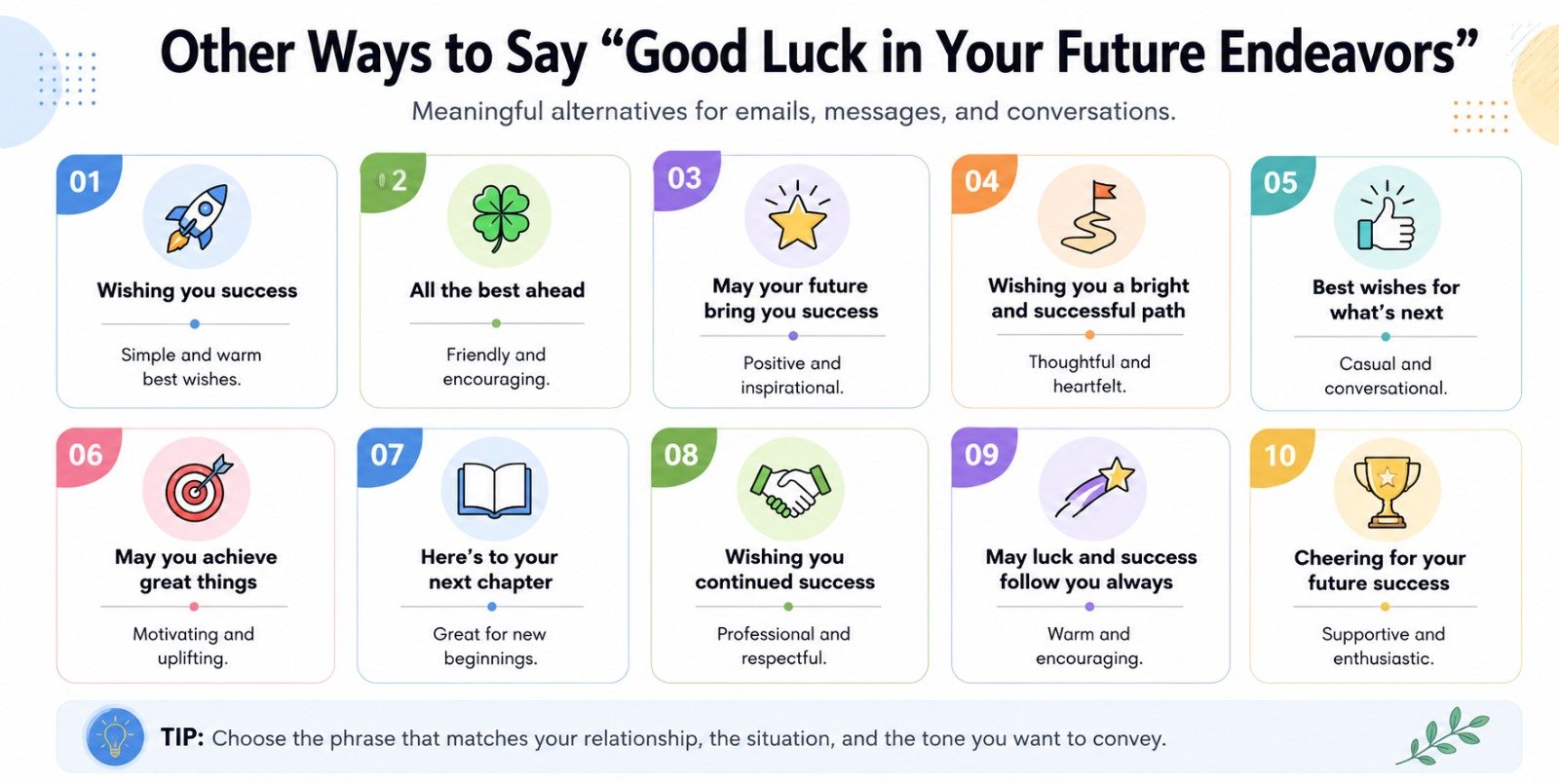
If you want another way to say “good luck in your future endeavors,” the best choice depends on who you’re speaking to and what they’re doing next. You might say “Wishing you continued success” in a professional email, “All the best for what comes next” to a coworker, or “I can’t wait to see what you do next” to someone you know well.
What Does “Good Luck in Your Future Endeavors” Mean?
“Good luck in your future endeavors” means “I hope you’re successful in whatever you choose to do next.”
The word endeavor can refer to a serious effort or an activity directed toward a goal. Merriam-Webster even includes “Best of luck in your future endeavors” as an example of the noun in use.
In a farewell message, “future endeavors” is deliberately broad. It might refer to someone’s:
- New job
- Career change
- Business venture
- Education
- Personal goals
- Retirement plans
- Creative projects
- Relocation
- Other future opportunities
That broad meaning is one reason the expression works well when you don’t know exactly what a person plans to do next. In workplace communication, however, the same vagueness can also make it sound impersonal.
Quick Comparison of the Best Alternatives
| Phrase | Tone | Best Used For |
|---|---|---|
| Wishing you continued success | Professional | Coworkers, managers, clients |
| Wishing you every success | Formal | Business emails and letters |
| Best wishes for your next chapter | Warm | Career changes and graduation |
| All the best for what comes next | Friendly-neutral | General farewells |
| Wishing you success in your new role | Professional and specific | Someone starting a new job |
| Here’s to new beginnings | Positive | Graduation, relocation, life changes |
| I’m excited to see what you do next | Personal | Friends and close coworkers |
| I know you’ll do great things | Encouraging | Friends, students, mentees |
| I’m rooting for you | Casual and supportive | Friends and close colleagues |
| Wishing you happiness and success ahead | Heartfelt | Personal farewell messages |
These expressions aren’t completely interchangeable. A phrase such as “Wishing you every success” is appropriate in a formal business message, while “I’m rooting for you” would usually be too casual for an official employee departure announcement.
Professional Alternatives for Workplace Farewells
When someone is leaving a workplace, the safest alternatives are positive, concise, and respectful. They should acknowledge the person’s next step without sounding overly emotional.
Other Ways to Say “Good Luck in Your Future Endeavors” Professionally
1. Wishing You Continued Success
This is one of the most natural professional alternatives. Unlike “good luck,” it emphasizes the person’s ongoing achievements rather than chance.
Example:
“Thank you for everything you’ve contributed to the team. Wishing you continued success in your career.”
2. Wishing You Every Success
A polished option for formal emails, farewell cards, and professional announcements.
Example:
“It has been a pleasure working with you. Wishing you every success in your new position.”
3. Best Wishes for Your Next Chapter
“Next chapter” sounds less corporate than “future endeavors” while remaining professional enough for most workplaces.
Example:
“Best wishes for your next chapter. I hope the new role brings you plenty of rewarding opportunities.”
4. Wishing You Success in Your New Role
When you know where the person is going, being specific usually sounds more genuine than mentioning vague “future endeavors.”
Example:
“Congratulations on the new position. Wishing you success in your new role.”
5. Best of Luck Moving Forward
This phrase maintains the original idea of wishing someone luck but sounds slightly more conversational.
Example:
“It’s been great having you on the team. Best of luck moving forward.”
6. Wishing You Success in All That Lies Ahead
This keeps the broad meaning of “future endeavors” but sounds a little warmer.
Example:
“Thank you for your hard work and dedication. Wishing you success in all that lies ahead.”
7. Here’s to Your Continued Success
This has a positive, celebratory quality, making it particularly useful for promotions, retirements, and successful career transitions.
Example:
“Congratulations on this exciting opportunity. Here’s to your continued success.”
Warmer Alternatives for Someone You Know Well
A corporate-sounding farewell can feel strange when you’re speaking to a friend or a coworker you’ve known for years. In those situations, a more personal expression usually works better.
Other Ways to Say “Good Luck in Your Future Endeavors” to a Friend
8. I’m Excited to See What You Do Next
This doesn’t simply wish the person luck; it shows genuine interest in their future.
Example:
“You’ve worked incredibly hard for this. I’m excited to see what you do next.”
9. I Know You’ll Do Great Things
This expresses confidence rather than uncertainty.
Example:
“I know you’ll do great things wherever this new journey takes you.”
10. I’m Rooting for You
Simple, warm, and supportive, this is ideal for someone you have a close relationship with.
Example:
“Starting your own business is a big step, but I’m rooting for you all the way.”
11. I Can’t Wait to See What You Accomplish
This works particularly well for graduates, students, younger colleagues, and mentees.
Example:
“You’ve got so much potential. I can’t wait to see what you accomplish.”
12. All the Best for What Comes Next
This is warmer than the original expression without becoming overly personal.
Example:
“It’s been wonderful working with you. All the best for what comes next.”
13. You Have an Exciting Future Ahead
This sounds encouraging and confident.
Example:
“Congratulations on graduating. You have an exciting future ahead.”
14. I Hope Your Next Adventure Is an Amazing One
“Adventure” changes the tone significantly. It is more playful and personal than “endeavor,” so it works better with friends and close coworkers than in formal business correspondence.
Example:
“I’m going to miss having you around. I hope your next adventure is an amazing one.”
Positive Alternatives for New Beginnings
Sometimes the important part of the message isn’t saying goodbye but celebrating what comes next.
Other Ways to Say “Good Luck in Your Future Endeavors” for a New Chapter
15. Here’s to New Beginnings
Short and upbeat, this phrase works well for career moves, graduation, relocation, and other major changes.
Example:
“Here’s to new beginnings and all the opportunities waiting for you.”
16. May Your Next Chapter Bring You Success and Happiness
This is thoughtful and slightly more formal.
Example:
“May your next chapter bring you success, happiness, and plenty of memorable experiences.”
17. Wishing You Great Things Ahead
A versatile expression for cards and messages.
Example:
“Wishing you great things ahead as you begin this new journey.”
18. May the Future Bring You Wonderful Opportunities
This focuses more on opportunity than luck.
Example:
“May the future bring you wonderful opportunities and experiences.”
19. Wishing You Growth and Fulfillment
Success doesn’t always mean promotions or money. This alternative is useful when you want your wish to include personal development and satisfaction.
Example:
“Wishing you growth and fulfillment in everything you choose to pursue.”
20. May This New Beginning Lead to Great Things
This is best used when someone is clearly starting something new.
Example:
“Congratulations on taking this step. May this new beginning lead to great things.”
Alternatives That Focus on Ability Instead of Luck
“Good luck” suggests that chance may play a role in success. Sometimes you may prefer wording that recognizes a person’s talent, preparation, or hard work.
Other Ways to Say “Good Luck” Without Mentioning Luck
21. I’m Confident You’ll Excel
Strong and professional, especially when you genuinely know the person’s abilities.
Example:
“I’m confident you’ll excel in your new leadership position.”
22. You’ve Got This
Very casual but highly encouraging.
Example:
“Tomorrow’s your first day. You’ve got this!”
This wouldn’t normally suit an official corporate farewell, but it can be perfect between friends.
23. Keep Reaching for Your Goals
This sounds motivational and is especially suitable for students and younger people.
Example:
“Keep reaching for your goals and never stop believing in what you can achieve.”
24. May Your Hard Work Bring You Success
This directly connects success to effort.
Example:
“May your hard work bring you all the success you deserve.”
25. I Have Every Confidence in Your Success
A much more formal expression that fits professional recommendations and senior-level communication.
Example:
“I have every confidence in your success as you take on this new responsibility.”
Short Alternatives for Cards, Texts, and Messages
Not every farewell needs a long sentence. When you’re signing a card or sending a quick message, these shorter expressions can sound more natural.
Short Other Ways to Say “Good Luck in Your Future Endeavors”
- All the best!
- Wishing you the best!
- Best wishes ahead!
- Here’s to what’s next!
- You’ve got this!
- Keep doing great things!
- Wishing you success!
- Onward and upward!
- I’m cheering you on!
- Here’s to new beginnings!
The tone matters here. “Onward and upward!” is upbeat and informal, while “Wishing you success” is safer in professional communication.
How to Write It in a Farewell Email
The strongest farewell messages don’t rely on a single stock phrase. A brief personal detail can make even a professional email feel sincere.
Instead of writing only:
“Good luck in your future endeavors.”
You might write:
“It’s been a pleasure working with you over the past three years. Your support on the project made a real difference, and I wish you continued success in your new role.”
Or:
“Thank you for everything you’ve contributed to the team. Best wishes for your next chapter, and I hope we have the chance to work together again.”
These messages work because the well-wish is supported by something specific.
Other Ways to Say “Good Luck in Your Future Endeavors” in an Email
Here are a few complete closing lines:
Professional:
“Thank you for your contributions to the team. Wishing you continued success in your next role.”
Warm professional:
“It’s been a pleasure working with you. All the best for what comes next.”
Manager to employee:
“We appreciate everything you’ve accomplished here and wish you every success in your next chapter.”
Coworker to coworker:
“I’ll miss working with you. I’m excited to see where this new opportunity takes you.”
Client or business contact:
“Thank you for the opportunity to work together. Wishing you continued success in all that lies ahead.”
Is “I Wish You Good Luck in Your Future Endeavors” Correct?
Yes, “I wish you good luck in your future endeavors” is grammatically understandable, but it can sound more formal and wordy than necessary.
In most situations, native English speakers would naturally shorten it to:
- “Good luck in your future endeavors.”
- “Wishing you all the best in your future endeavors.”
- “I wish you every success.”
- “Wishing you continued success.”
- “All the best for the future.”
“I wish you good luck” isn’t wrong, but “I wish you the best” or simply “good luck” often sounds smoother in everyday English.
“Good Luck in” or “Good Luck With” Your Future Endeavors?
Both “good luck in your future endeavors” and “good luck with your future endeavors” can be understood naturally.
The difference is small:
Good luck in your future endeavors treats the endeavors as the areas or activities in which the person hopes to succeed.
Good luck with your future endeavors treats those endeavors more like projects or undertakings the person will handle.
Neither changes the overall message significantly.
You could therefore write:
“Good luck in your future endeavors.”
or:
“Good luck with your future endeavors.”
However, in many cases a more specific sentence sounds better:
“Good luck with your new business.”
“Wishing you success in your new role.”
Specific wording often feels more personal because the recipient knows the message was written for them rather than copied from a standard farewell.
“Good Luck in Your New Endeavours”: Endeavors or Endeavours?
Both spellings are correct, but they belong to different varieties of English.
Endeavor is the standard American spelling.
Endeavour is the standard British spelling. Merriam-Webster identifies “endeavour” as chiefly British, while Cambridge lists the British form and notes the U.S. spelling “endeavor.”
So you might write:
American English:
“Good luck with your future endeavors.”
British English:
“Good luck with your future endeavours.”
The same distinction applies to phrases such as “good luck in your new endeavours.”
Not Every Alternative Means Exactly the Same Thing
Choosing an alternative isn’t simply a matter of replacing one phrase with another.
Consider these examples:
“Wishing you continued success” assumes or suggests the person has already experienced success.
“I’m rooting for you” expresses personal support and is considerably more informal.
“Here’s to new beginnings” celebrates a transition but doesn’t explicitly wish the person success.
“I have every confidence in your success” communicates belief in the person’s ability rather than wishing them luck.
“May your future be filled with wonderful opportunities” focuses on opportunities becoming available rather than what the person achieves.
“Best wishes for your next chapter” is broad enough for professional or personal transitions but feels warmer than traditional corporate wording.
These distinctions matter because the best phrase depends on what you actually want to communicate.
How to Choose the Right Expression
Before choosing your farewell wording, consider three things.
Your relationship: A close friend may appreciate “I’m rooting for you,” while a client may expect “Wishing you continued success.”
The situation: If someone is starting a known job, mentioning the role is usually better than referring vaguely to “future endeavors.”
The tone: Formal messages call for restrained wording. Personal farewells can be warmer, more emotional, or more enthusiastic.
A good rule is to become more specific when you know what the person is doing next.
Instead of:
“Good luck in your future endeavors.”
Try:
“Wishing you every success as you begin your new role in Boston.”
Specific wording often feels more thoughtful.
Frequently Asked Questions
What is another way to say “good luck in your future endeavors”?
One of the most versatile alternatives is “Wishing you continued success.” Other natural options include “Best wishes for your next chapter,” “All the best for what comes next,” and “Wishing you every success.”
What is the meaning of “good luck in your future endeavors”?
It means that you hope someone succeeds in the projects, goals, activities, or opportunities they pursue in the future. “Endeavor” can mean a serious effort or an activity directed toward a goal.
Is “good luck in your future endeavors” professional?
Yes. It is polite and appropriate for workplace and formal communication. However, modern usage guides note that it can feel generic or impersonal, particularly when a more specific farewell would be possible.
Can “good luck in your future endeavors” sound rude?
The phrase itself isn’t rude. The surrounding situation can affect how it is interpreted, though. Because “future endeavors” is commonly used when professional relationships end, a very short message containing only this phrase may occasionally feel cold or final. A personal sentence before it usually softens the tone.
How do you say “good luck in your future endeavors” more warmly?
Try “I’m excited to see what you do next,” “I’m rooting for you,” “I know you’ll do great things,” or “Wishing you happiness and success in your next chapter.”
How do you professionally wish someone well for the future?
You can say “Wishing you continued success,” “Wishing you every success in your new role,” “Best wishes for your next chapter,” or “Wishing you success in all that lies ahead.”
Is “good luck with your future endeavor” correct?
Yes, if you’re referring to one specific future undertaking, “future endeavor” can be singular. However, the plural “future endeavors” is more common when you’re broadly wishing someone well in whatever they do next.
Should I say “future endeavors” if I know the person’s next job?
You can, but specific wording often sounds more personal. Instead of “Good luck in your future endeavors,” you might say, “Wishing you every success in your new role at the university.”
What can I use instead of the word “endeavors”?
Depending on the context, natural replacements include plans, projects, pursuits, goals, opportunities, next steps, new role, journey, and next chapter. They don’t all mean exactly the same thing, so choose one that matches the situation.
Conclusion
“Good luck in your future endeavors” remains a perfectly acceptable farewell, especially when you need professional and neutral wording. But you don’t have to use the same expression in every situation. “Wishing you continued success” is strong and professional, “Best wishes for your next chapter” feels warmer, and “I’m rooting for you” provides personal encouragement. The right choice depends on your audience, relationship, situation, and desired level of formality.
Small wording differences can change a farewell from routine to genuinely thoughtful. Clarifyra helps you recognize those differences so you can choose language that says what you actually mean and fits the person you’re speaking to.
You May Also Read | 65 Other Ways to Say “Good Luck” for Every Situation