Groggy Meaning: Definition, Pronunciation and Examples
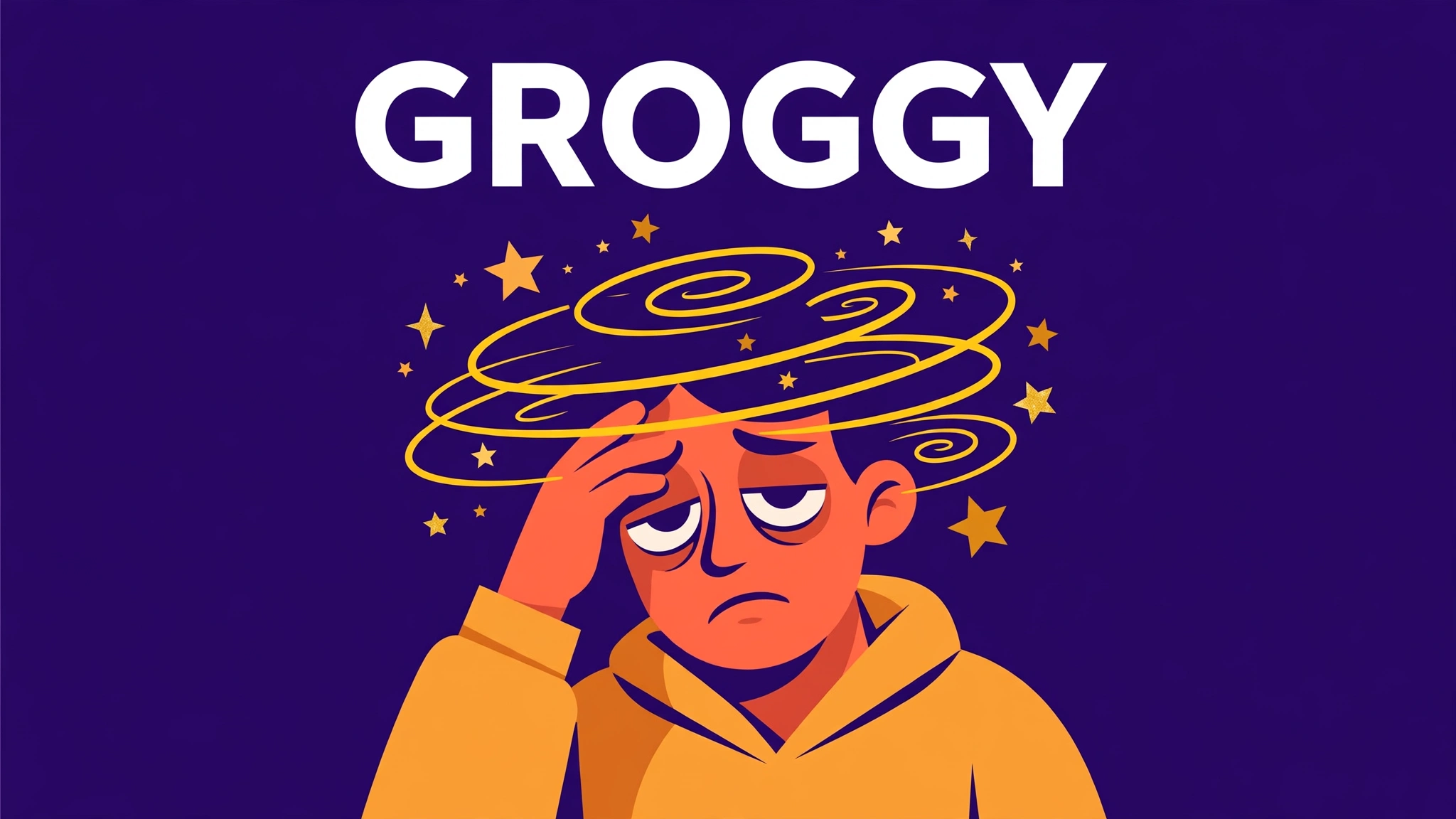
Groggy means feeling dazed, weak and unsteady — the foggy, heavy-headed state you are in when you have just woken up, are short of sleep, are unwell, or are recovering from a sedative or a blow. It is an informal adjective: the sleeping pills left her groggy; he was still groggy from the anaesthetic; late nights make me groggy the next morning. The word has nothing to do with feeling drunk in modern English (that sense is now archaic), even though it comes from grog, the watered-down rum once served to sailors in the Royal Navy — a story involving an admiral nicknamed “Old Grog,” told in full below.
Quick Answer
Groggy (UK /ˈɡrɒɡi/, US /ˈɡrɑːɡi/) is an informal adjective meaning dazed, weak and unsteady, unable to think or move properly — typically because of tiredness, illness, medication or a knock. Say feel groggy, groggy from (sleep, the anaesthetic) or groggy with (sleep). It comes from grog, the diluted rum ration introduced in the Royal Navy in 1740 by Admiral Edward “Old Grog” Vernon, and originally described the shaky feeling the drink produced. The noun is grogginess; the adverb is groggily.
What does “groggy” mean?
The major dictionaries agree closely on the core meaning, though each one lights it from a slightly different angle:
- Oxford Learner’s Dictionaries: “weak and unable to think or move well because you are ill or very tired” — with the examples The sleeping pills left her feeling very groggy and He’s still groggy from the anaesthetic.
- Merriam-Webster: “weak and unsteady on the feet or in action.”
- Collins (British English): “dazed or staggering, as from exhaustion, blows, or drunkenness,” plus a second sense, “faint or weak.” Collins COBUILD puts it in plain learner’s English: “If you feel groggy, you feel weak and rather ill.”
- Cambridge Dictionary: “weak and walking unsteadily.”
Put together, groggy describes a temporary state with three ingredients: a clouded head (you cannot think straight), a weakened body (your limbs feel heavy), and unsteady movement (you wobble when you stand). It is almost always caused by something identifiable — too little sleep, a sedative, an illness, hunger, or a hit — and it passes. A boxer on the ropes after a hard left jab is the classic image in American dictionaries; Collins uses exactly that example, “a boxer groggy from his opponent’s hard left jab.” Hours later the same word fits you at 6 a.m. after a red-eye flight. The cause differs; the fog is the same.
Groggy is labelled informal by Oxford and Collins, which means it belongs in conversation, fiction, journalism and everyday writing rather than in a medical report or a legal document. A doctor might write “the patient was drowsy”; the patient says “I felt groggy.” Oxford also marks it [not usually before noun]: English prefers she felt groggy or a groggy patient sounds less natural than the patient was still groggy. One common exception is a groggy voice — the croaky, half-asleep sound of someone who has just woken, as in “His voice was still groggy from sleep.”
Pronunciation
British English: /ˈɡrɒɡi/ — “GROG-ee,” with a short o as in hot.
American English: /ˈɡrɑːɡi/ — “GRAH-gee,” with the broader, longer ah vowel Americans use in father.
The difference is only the vowel in the first syllable; both are two syllables with the stress on the first. The comparative and superlative are groggier and groggiest, and the derived forms are the adverb groggily (“she groggily reached for the alarm clock”) and the noun grogginess (“the grogginess wore off by midday”).
How to use “groggy” in sentences
The word settles into a few reliable patterns:
- feel / be / look groggy — “I feel groggy every time I nap for more than twenty minutes.”
- groggy from + cause — “He’s still groggy from the anaesthetic.” / “Passengers were groggy from the overnight flight.”
- groggy with + state — “Groggy with sleep, she couldn’t remember where she’d left her keys.”
- leave / make someone groggy — “The sleeping pills left her feeling very groggy.” / “Late nights always make me groggy the next morning.”
More examples in natural contexts:
- “The medicine sometimes makes patients groggy, so don’t drive after taking it.” (Merriam-Webster’s own example pattern)
- “I’m still a little groggy from my nap — give me five minutes and a coffee.”
- “Both players looked groggy after the clash of heads, and the referee stopped the match.”
- “She woke groggy and disoriented in the hospital bed.”
- “A groggy voice answered the phone on the sixth ring.”
Groggy and its neighbours: similar words compared
English has a whole shelf of words for not-quite-right states of mind, and choosing among them is mostly about cause and flavour:
| Word | Core meaning | Typical cause | Notes |
|---|---|---|---|
| groggy | Dazed, weak, unsteady; cannot think or move well | Sleep (too much or too little), sedatives, illness, a blow | Informal; the all-purpose word for the fogged state |
| woozy | Dizzy and slightly sick; the room tilts | Stood up too fast, heat, illness, drink | Emphasises dizziness and mild nausea more than sleepiness; common in both UK and US casual speech |
| dazed | Stunned, unable to think clearly | Shock, bad news, a blow to the head | More mental than physical; no necessary unsteadiness |
| muzzy | Blurred, confused thinking; muzzy-headed | Tiredness, drink, a cold | Distinctly British in flavour; also means “blurred” for sounds and outlines |
| drowsy | Sleepy, about to fall asleep | Tiredness, warmth, medication | You can be drowsy and perfectly clear-headed once awake; groggy is the state after waking |
| foggy (brain fog) | Mentally clouded, forgetful, slow | Illness, poor sleep, stress | Focuses on thinking, not balance; my brain feels foggy |
| light-headed | Feeling faint, as if about to pass out | Low blood pressure, hunger, standing suddenly | More alarming than groggy; about faintness, not fog |
A useful rule of thumb: if you have just woken up or are recovering from something, groggy is almost always the word a native speaker reaches for. If the world is spinning, woozy or dizzy fits better; if you are simply ready to sleep, drowsy.
Where “groggy” comes from: Old Grog and his rum
The word’s history starts with a cloak. Admiral Edward Vernon (1684–1757), a senior Royal Navy commander, was known to his sailors as “Old Grog” because he habitually wore a cloak of grogram — a coarse, stiff fabric woven from silk and wool. In 1740, worried about drunkenness aboard ship, Vernon ordered that the sailors’ daily rum ration be diluted with water. The unpopular mixture was promptly dubbed grog after the admiral himself, and the word spread from naval slang into general English.
Groggy is simply grog plus the adjective ending -y: originally, to be groggy was to be shaky and unsteady the way grog made you shaky and unsteady. From there the meaning broadened to cover the same unsteady, fogged feeling from any cause — exhaustion, blows, illness, or interrupted sleep.
A word of precision about dates, because the dictionaries do not perfectly agree: Collins dates groggy to about 1760–70, within a generation of Vernon’s order, while Merriam-Webster gives 1821 as the first known use in its modern sense. Both can be respected at once: the term may have circulated in speech and naval slang before the surviving written record pins it down. The origin itself — grog — is not in dispute.
Correct vs. incorrect use
Correct: “The sleeping pills left her feeling very groggy.”
Correct: “I’m still a little groggy from my nap.”
Correct: “Late nights always make me groggy the next morning.”
Correct: “The boxer was groggy after the knockdown but beat the count.”
Incorrect: Using groggy to mean “drunk” in modern English. That was its earliest sense, but dictionaries now mark it archaic; today a groggy person is fogged and unsteady, not necessarily intoxicated. If you mean drunk, say drunk, tipsy, or intoxicated.
Incorrect: “She groggy walked to the door.” The adverb is groggily: “She walked groggily to the door.”
Incorrect: Misspellings such as groggy written as “groggi” or “grogy.” The word doubles the g and ends in -y: g-r-o-g-g-y.
Avoid: “The groggy of the morning lasted hours.” Use the noun grogginess: “The grogginess lasted for hours.”
Common mistakes
Confusing “groggy” with “grumpy”
The two often travel together — plenty of people wake up groggy and grumpy — but they describe different things. Groggy is physical and mental fog; grumpy is bad temper. “Don’t talk to me, I’m groggy” means your head is not working yet, not that you are cross.
Using it for serious symptoms
Groggy is a light, informal word for a mild, passing state. If someone cannot be roused, is confused for hours, or is unsteady after a head injury, groggy understates the situation — and more importantly, that person may need medical attention rather than a vocabulary note. Use drowsy, disoriented, or unresponsive in serious contexts, and get help.
Expecting it before a noun
Oxford notes that groggy is “not usually before noun.” The groggy passengers stumbled off the plane is possible but less idiomatic than The passengers were still groggy as they stumbled off the plane. The well-established exception is a groggy voice.
FAQs
What is the difference between “groggy” and “tired”?
Tired means you need rest; groggy means your head and body are not working properly yet. You are usually groggy just after sleeping — on waking, after a nap, or after sedation — whereas tiredness is what you feel before sleep. The two often overlap but are not interchangeable: a full night’s sleep can still leave you groggy for the first few minutes.
Is “groggy” informal?
Yes. Oxford Learner’s and Collins both label it informal. It is perfect for everyday speech, messages, stories and most journalism, but in formal or medical writing you would more likely see drowsy, sedated, or disoriented.
How do you pronounce “groggy”?
In British English, /ˈɡrɒɡi/ (“GROG-ee”); in American English, /ˈɡrɑːɡi/ (“GRAH-gee”). Two syllables, stress on the first.
What is the noun form of “groggy”?
Grogginess: “The grogginess from the night flight took all morning to clear.” The adverb is groggily: “He groggily answered the door.”
Where does the word “groggy” come from?
From grog, the watered rum ration ordered by Admiral Edward Vernon in 1740. Vernon was nicknamed “Old Grog” for his grogram cloak; the diluted drink took his nickname, and someone unsteady as if from grog was called groggy. The original “drunk” sense is now archaic — today the word covers the same fogged feeling from sleep, illness, medication or a blow.
Can “groggy” describe a voice?
Yes. A groggy voice is a common expression for the thick, croaky voice of someone who has just woken up: “A groggy voice answered the phone.” It is the main exception to the word’s usual position after a verb.
Takeaway
Groggy (UK /ˈɡrɒɡi/, US /ˈɡrɑːɡi/) is the informal adjective for that dazed, weak, unsteady fog you feel on waking, after too little sleep, under medication, or after a knock — “weak and unable to think or move well,” as Oxford puts it. Use it after verbs (feel groggy, groggy from the anaesthetic), reach for woozy when dizziness dominates and drowsy when you simply need sleep, and remember its salty origin: the diluted rum of Admiral “Old Grog” Vernon, whose shaky after-effects gave English the word.