Writing & Grammar
Resume or Resumé: Which Is Correct?
Resume or resumé? Here is the reassuring news first: both are accepted spellings of the job-application document — and so is…
Read MoreThe Writing & Grammar section of Clarifyra helps readers improve grammar, vocabulary, sentence structure, and word choice. Here, you can explore clearer alternatives to common phrases, useful transition words, academic expressions, and practical grammar guidance for essays, articles, reports, and everyday writing.
Our guides focus on more than just correctness. They explain differences in tone, formality, meaning, and context so you can choose wording that sounds natural and fits the situation. Whether you want to avoid repetition, strengthen a sentence, or understand a grammar point more clearly, this section is designed to make better writing easier.

Resume or resumé? Here is the reassuring news first: both are accepted spellings of the job-application document — and so is…
Read More →
Themselves or theirselves? In standard English there is no contest: themselves is correct, and theirselves is non-standard. Cambridge’s grammar reference lists…
Read More →
Tye or tie? For anything you are writing today — a knot, a necktie, a drawn game, a family connection —…
Read More →
Specialty or speciality? If you have seen both and wondered whether one of them is a mistake, relax: both are correct.…
Read More →
If you have ever hesitated between comming and coming — usually mid-text-message, thumb hovering over the keyboard — here is the…
Read More →
Here is the good news first: emigrated and immigrated are both correct words, and they describe the same journey. The difference…
Read More →
Here is the surprise this spelling question is hiding: planned and planed are not two spellings of one word. They are…
Read More →
Here is a spelling question with a twist: the answer is frolic — one l, no k — but the letter…
Read More →
If you have ever hesitated between imbed and embed, here is the good news — and it is unusual for this…
Read More →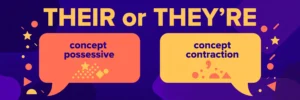
If you have ever typed they’re, deleted it, retyped their, deleted that too, and finally rewritten the whole sentence to dodge…
Read More →