Writing & Grammar
75 Funny Ways to Say Hi: Playful Greetings for Any Casual Conversation
A simple “hi” gets the job done, but sometimes you want your greeting to have a little more personality. Funny ways…
Read MoreThe Writing & Grammar section of Clarifyra helps readers improve grammar, vocabulary, sentence structure, and word choice. Here, you can explore clearer alternatives to common phrases, useful transition words, academic expressions, and practical grammar guidance for essays, articles, reports, and everyday writing.
Our guides focus on more than just correctness. They explain differences in tone, formality, meaning, and context so you can choose wording that sounds natural and fits the situation. Whether you want to avoid repetition, strengthen a sentence, or understand a grammar point more clearly, this section is designed to make better writing easier.

A simple “hi” gets the job done, but sometimes you want your greeting to have a little more personality. Funny ways…
Read More →
Saying “hi” is often the first step toward connecting with someone in another language. But greetings don’t always translate word for…
Read More →
“Hi” is simple, friendly, and useful in almost any casual situation, but it isn’t your only option. There are plenty of…
Read More →
“Happy birthday!” is perfectly fine, but sometimes it feels a little too predictable. With a close friend, sibling, partner, or someone…
Read More →
A simple “Happy birthday!” always works, but a good friend often deserves something more personal. The best ways to say happy…
Read More →
“Happy birthday” is simple, warm, and always appropriate, but sometimes you want your message to feel a little more personal. Using…
Read More →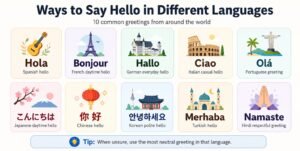
A simple “hello” can open a conversation almost anywhere, but the words you use change from language to language—and sometimes according…
Read More →
A plain “hello” gets the job done, but it isn’t always the most entertaining way to start a conversation. With close…
Read More →
“Hello” works almost anywhere, but using it every time can make conversations feel repetitive. There are plenty of different ways to…
Read More →
“For example” is clear, natural, and useful, but repeating it too often can make an essay, report, email, or explanation feel…
Read More →