Writing & Grammar
Loss or Lost: What’s the Difference?
Quick Answer: Loss is a noun — the thing itself (a financial loss, a terrible loss, their first loss of the…
Read MoreThe Writing & Grammar section of Clarifyra helps readers improve grammar, vocabulary, sentence structure, and word choice. Here, you can explore clearer alternatives to common phrases, useful transition words, academic expressions, and practical grammar guidance for essays, articles, reports, and everyday writing.
Our guides focus on more than just correctness. They explain differences in tone, formality, meaning, and context so you can choose wording that sounds natural and fits the situation. Whether you want to avoid repetition, strengthen a sentence, or understand a grammar point more clearly, this section is designed to make better writing easier.
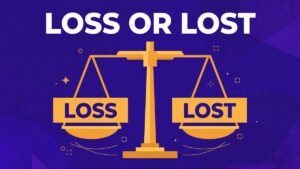
Quick Answer: Loss is a noun — the thing itself (a financial loss, a terrible loss, their first loss of the…
Read More →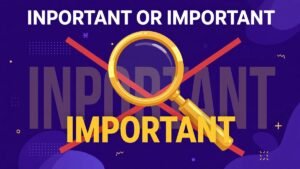
Quick Answer: Important — with an m — is the only correct spelling. Inportant is not a word. The trap is…
Read More →
Quick Answer: The correct modern spelling is homage — omage is not a standard English spelling. But here’s the twist: saying…
Read More →
Quick Answer: Neither spelling is wrong. Savasana and shavasana are two English transliterations of the Sanskrit word शवासन (śavāsana), the yoga…
Read More →
Almost everyone has been corrected on this pair at some point — usually by someone insisting that till is just lazy…
Read More →
It is the spelling mistake that launches a thousand Thanksgiving menus: turkies. The word looks almost right — after all, city…
Read More →
One pack of animals, two possible spellings — and a twist. The plural of wolf is wolves, full stop. But wolfs…
Read More →
One tiny apostrophe, two completely different meanings. Write “my friends are coming” and you are talking about several people. Write “my…
Read More →
If you have ever typed disassociate and had a spellchecker shrug, an editor circle it, or a colleague insist it “isn’t…
Read More →
Both are correct — this is a variant pair, not a right-and-wrong pair. Nana is the headword form in the major…
Read More →