This vs These: Meaning, Grammar, and Examples
“This” and “these” are both correct English words, but they are used with different numbers of people, objects, or ideas. The confusion usually happens because both words point to something relatively close to the speaker. The key difference is simple: this is singular, while these is plural. Once you understand that pattern, choosing the right form becomes much easier in both speaking and writing.
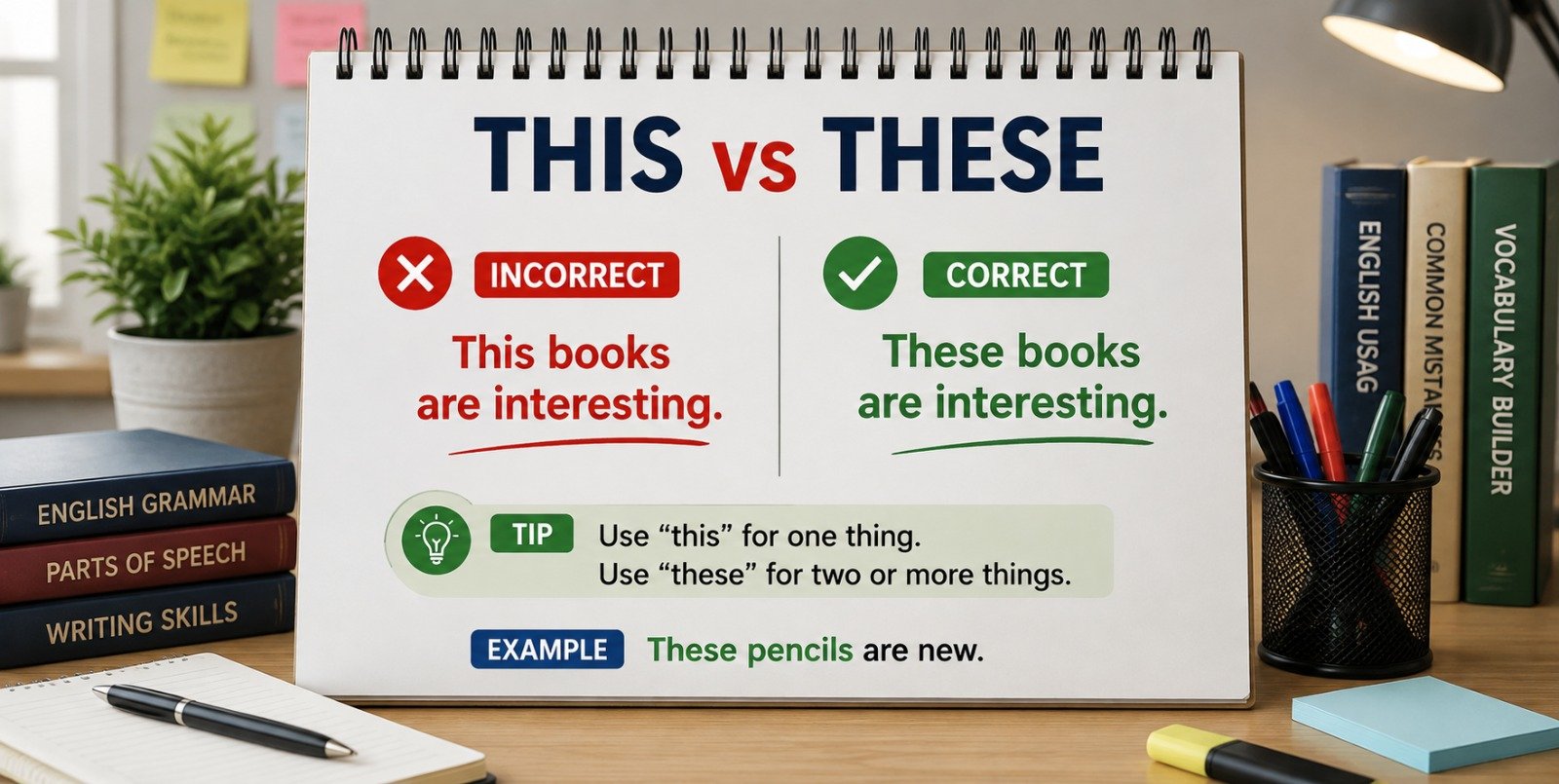
This is used for one person, thing, or idea that is relatively close: “This book is mine.” These is the plural form and is used for two or more nearby people or things: “These books are mine.”
This vs These: What’s the Difference?
The main difference between this and these is grammatical number.
Use this when referring to one thing.
- This chair is comfortable.
- This is my phone.
- I like this idea.
Use these when referring to more than one thing.
- These chairs are comfortable.
- These are my phones.
- I like these ideas.
Both words are demonstratives. They can point to people, objects, situations, or ideas that the speaker considers close in space, time, or context.
A useful rule is:
This = singular and near
These = plural and near
Quick Comparison Table
| Feature | This | These |
|---|---|---|
| Number | Singular | Plural |
| Refers to | One person, thing, or idea | Two or more people, things, or ideas |
| Typical distance | Near | Near |
| Common verb | is | are |
| Example | This bag is heavy. | These bags are heavy. |
The distinction is especially easy to see when the same noun changes from singular to plural:
- This car is new.
- These cars are new.
What Does “This” Mean?
“This” is used to identify or point to a singular person, object, idea, or situation that feels close to the speaker.
It can appear before a noun:
- This computer is expensive.
- This restaurant is busy.
- This answer is correct.
It can also stand alone as a pronoun:
- This is delicious.
- This is my seat.
- Who gave you this?
“This” is also used with uncountable nouns because those nouns do not normally take a plural form.
For example:
- This information is useful.
- This water is cold.
- This music is relaxing.
You would not normally say “these information” or “these water” in standard English.
What Does “These” Mean?
“These” is the plural form of “this.” It refers to two or more people, objects, or countable things that are relatively close to the speaker.
Examples include:
- These books belong to me.
- These shoes are too small.
- These cookies taste great.
- These students finished early.
Like “this,” “these” can also work without a noun when the meaning is clear.
For example:
- Which glasses are yours?
- These are mine.
Here, “these” replaces the longer phrase “these glasses.”
This vs These Grammar Rules
The most important rule in this vs these grammar is agreement between the demonstrative, noun, and verb.
Use “This” With Singular Nouns
Correct:
- This dog is friendly.
- This problem seems difficult.
- This building looks old.
Incorrect:
- This dogs are friendly.
- This problems seem difficult.
“This” must normally be followed by a singular countable noun or an uncountable noun.
Use “These” With Plural Nouns
Correct:
- These dogs are friendly.
- These problems seem difficult.
- These buildings look old.
Incorrect:
- These dog is friendly.
- These problem seems difficult.
Because “these” is plural, the noun following it should normally also be plural.
Use the Correct Verb
“This” commonly pairs with is.
- This is my jacket.
- This is important.
“These” commonly pairs with are.
- These are my jackets.
- These are important.
A common error is mixing singular and plural forms:
Incorrect: These is my book.
Correct: This is my book.
Incorrect: This are my shoes.
Correct: These are my shoes.
This vs These Examples in Sentences
Seeing the words side by side makes the distinction clearer.
Examples With “This”
- This cup is clean.
- This movie is surprisingly good.
- This road leads to the station.
- This question is difficult.
- This photo was taken yesterday.
- I cannot understand this sentence.
Examples With “These”
- These cups are clean.
- These movies are surprisingly good.
- These roads lead to the station.
- These questions are difficult.
- These photos were taken yesterday.
- I cannot understand these sentences.
These this and these examples show the same pattern throughout: singular nouns take “this,” while plural nouns take “these.”
This vs These vs Those
The distinction becomes even easier when “that” and “those” are included.
English has four common demonstratives:
| Number | Near | Farther Away |
|---|---|---|
| Singular | this | that |
| Plural | these | those |
So:
- This = one thing near you
- These = several things near you
- That = one thing farther away
- Those = several things farther away
Imagine several books are lying beside you.
You might say:
- These books are mine.
If the books are across the room, you might instead say:
- Those books are mine.
For one book beside you:
- This book is mine.
For one book farther away:
- That book is mine.
These vs Those: Difference and Examples
Because both “these” and “those” are plural, their main difference is usually proximity.
Use these for people or things that feel close:
- These flowers smell wonderful.
- These shoes fit perfectly.
- These documents are important.
Use those for people or things perceived as farther away:
- Those flowers near the gate are beautiful.
- Those shoes on the top shelf are expensive.
- Those houses across the road are new.
These those and these examples show that number stays plural while the sense of distance changes.
Those and These Difference Examples
Compare these pairs:
- These apples are ripe, but those apples are not.
- These chairs are ours; those chairs belong to the guests.
- These pictures were taken today, while those were taken last year.
The idea of distance can also be figurative rather than physical.
For example:
- These days, I work from home.
- In those days, people wrote more letters.
“These days” refers to the present period, while “those days” usually refers to a more distant period in the past.
This vs These Pronunciation
“This” and “these” begin with the same voiced th sound, but their vowel and final sounds are different.
This is pronounced approximately:
/ðɪs/
It has a short vowel sound, similar to the vowel in “sit.”
These is pronounced approximately:
/ðiːz/
It has a long “ee” sound and ends with a “z” sound.
A simple pronunciation guide is:
- this → “thihs”
- these → “theez”
Practice them in pairs:
- this book / these books
- this chair / these chairs
- this idea / these ideas
Pronouncing the plural ending clearly can also help listeners distinguish “these” from “this.”
Why Are “This” and “These” Confused?
The words are closely related, so confusion is understandable. Both point to something that feels close to the speaker, and both can appear either before a noun or on their own.
The main source of mistakes is forgetting whether the noun is singular or plural.
For example:
Incorrect: This shoes look nice.
The noun “shoes” is plural, so the correct sentence is:
Correct: These shoes look nice.
Another source of confusion is concentrating on distance while overlooking number. Distance matters, but number comes first when choosing between “this” and “these.”
Common Mistakes to Avoid
Using “This” With a Plural Noun
Incorrect: This books are expensive.
Correct: These books are expensive.
Using “These” With a Singular Noun
Incorrect: These phone belongs to me.
Correct: This phone belongs to me.
Using the Wrong Verb
Incorrect: These is my keys.
Correct: These are my keys.
Incorrect: This are the right answer.
Correct: This is the right answer.
Using “These” With Uncountable Nouns
Incorrect: These information is helpful.
Correct: This information is helpful.
“Information” is uncountable, so “this information” is the standard form.
An Easy Way to Remember the Difference
A simple memory pattern is:
this → one
these → more than one
You can also connect the words with their most common verbs:
this is
these are
Try converting a sentence from singular to plural:
- This apple is fresh.
- These apples are fresh.
- This child is laughing.
- These children are laughing.
- This answer is correct.
- These answers are correct.
If the noun becomes plural, “this” normally becomes “these.”
More This vs These Sentences
Here are additional examples for everyday situations:
- This jacket belongs to Sarah.
- These jackets are on sale.
- This lesson is easier than the last one.
- These lessons are helpful.
- This cake tastes amazing.
- These cakes were made this morning.
- This email needs a reply.
- These emails need replies.
- This child is waiting outside.
- These children are waiting outside.
Notice that the grammatical structure changes naturally with the number of things being discussed.
Final Verdict: When Should You Use This or These?
Use this when referring to one nearby person, thing, idea, or uncountable noun. Use these when referring to two or more nearby countable things. Remembering the simple pattern “this is” and “these are” will help you avoid most mistakes. It is a small grammar distinction, but mastering comparisons like this makes everyday English clearer and more accurate—a goal that also fits the practical language guidance readers expect from Clarifyra.
FAQs
Is “this” singular or plural?
“This” is singular. It is used with one person, object, idea, or with an uncountable noun, as in “this chair,” “this person,” or “this information.”
Is “these” the plural of “this”?
Yes. “These” is the plural form of “this.” For example, “this book” becomes “these books” when referring to more than one book.
Is it correct to say “this people”?
No. “People” is plural, so the standard form is “these people.” You can say “this person” when referring to one individual.
What is the difference between “these” and “those”?
Both are plural demonstratives. “These” usually refers to people or things that are relatively close, while “those” generally refers to people or things that are farther away.
Should I say “this is” or “these are”?
Use “this is” for singular subjects and “these are” for plural subjects. For example: “This is my pen” and “These are my pens.”
Can “this” and “these” be used without a noun?
Yes. Both can work as pronouns when the meaning is understood. For example, “This is mine” refers to one item, while “These are mine” refers to several items.
You May Also Read | Advisers vs Advisors: Differences, Examples and Which Spelling to Use